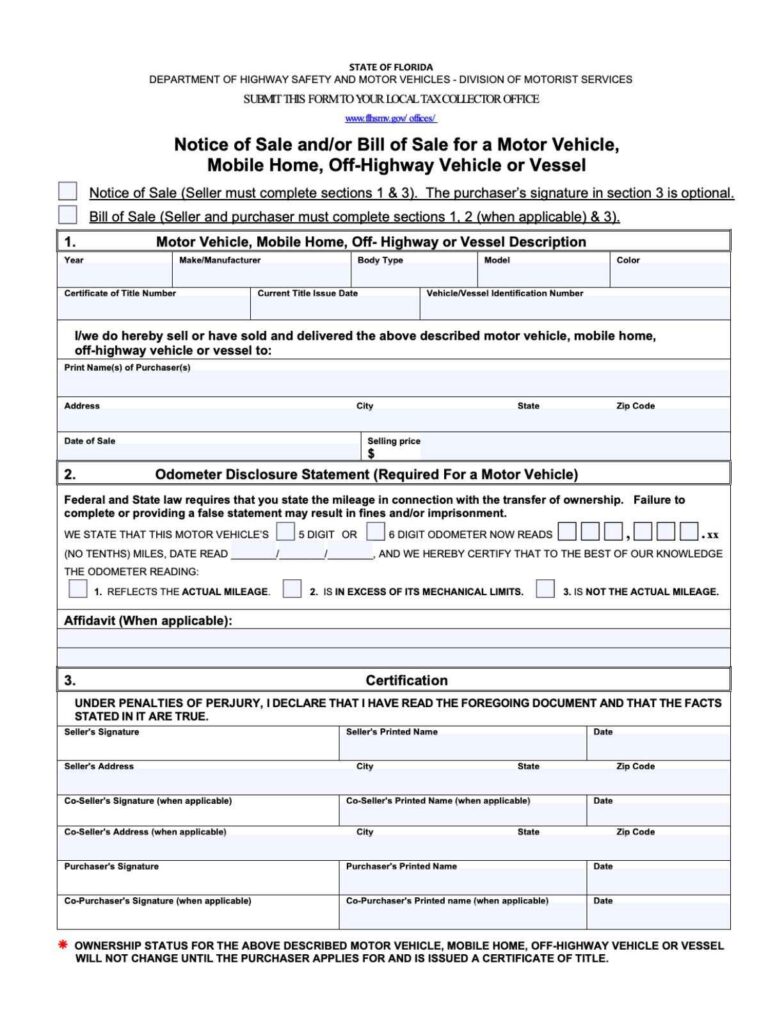
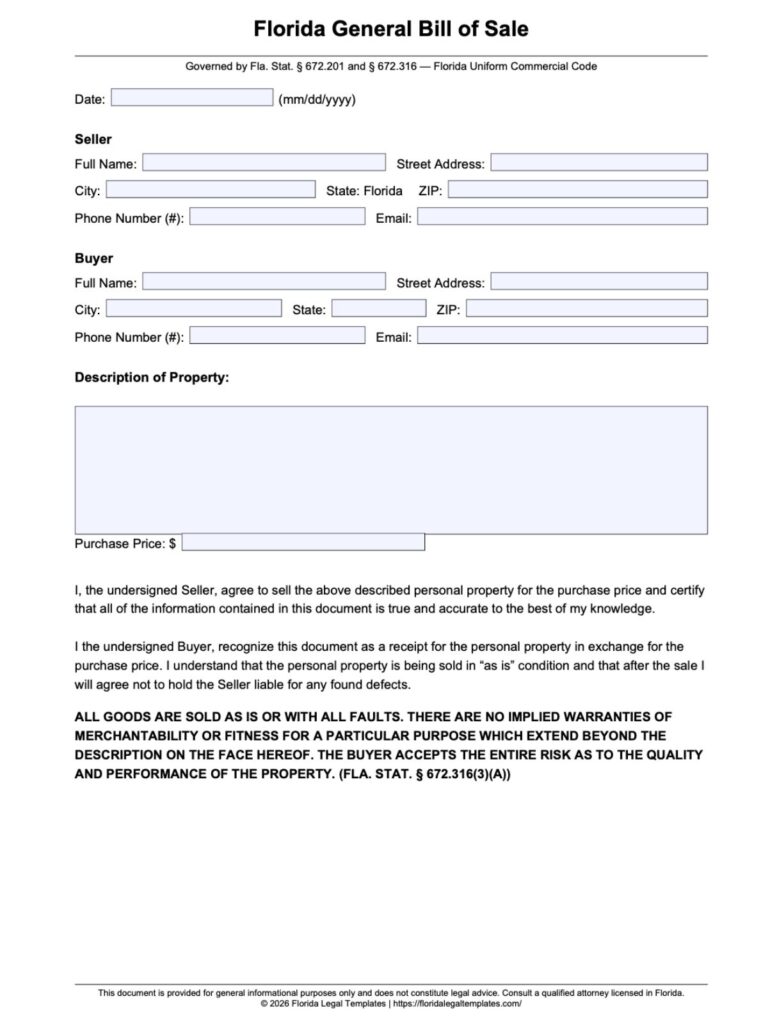
Bill Of Sale

Selling or buying a vehicle, boat, trailer, or other personal property involves more than agreeing on a price. Both parties should understand what is being sold, what the buyer is paying, and which documents they need to keep after the transaction. A bill of sale records the details of a sale and can help the buyer and seller document what they agreed to.

The right form depends on the type of property involved. A car sale may require different paperwork from a boat transfer, while an agreement for used equipment or household property may not involve the same title and registration requirements. This collection brings together Florida bill of sale templates and practical guides for different types of transactions.

Choose the Right Florida Bill of Sale

Start with the property you’re buying or selling. Our guides cover several common transactions, including cars, motorcycles, recreational vehicles, trailers, boats, jet skis, ATVs, golf carts, and equipment. If you’re selling something that doesn’t fit one of these categories, a general or personal property bill of sale may be more appropriate.

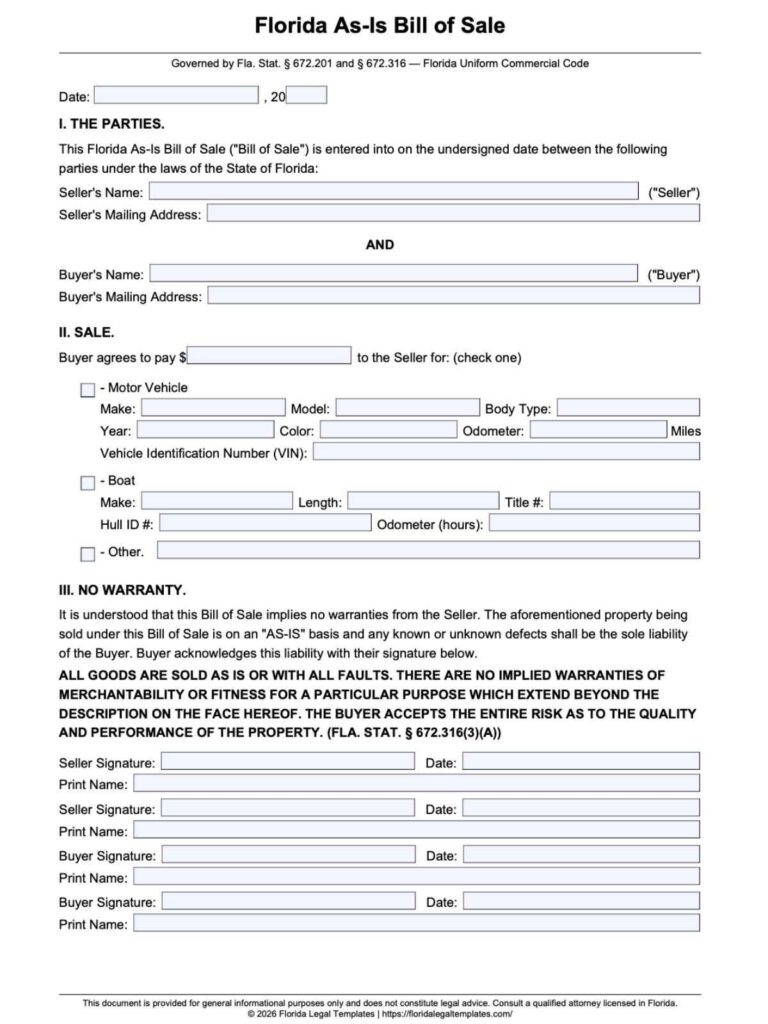
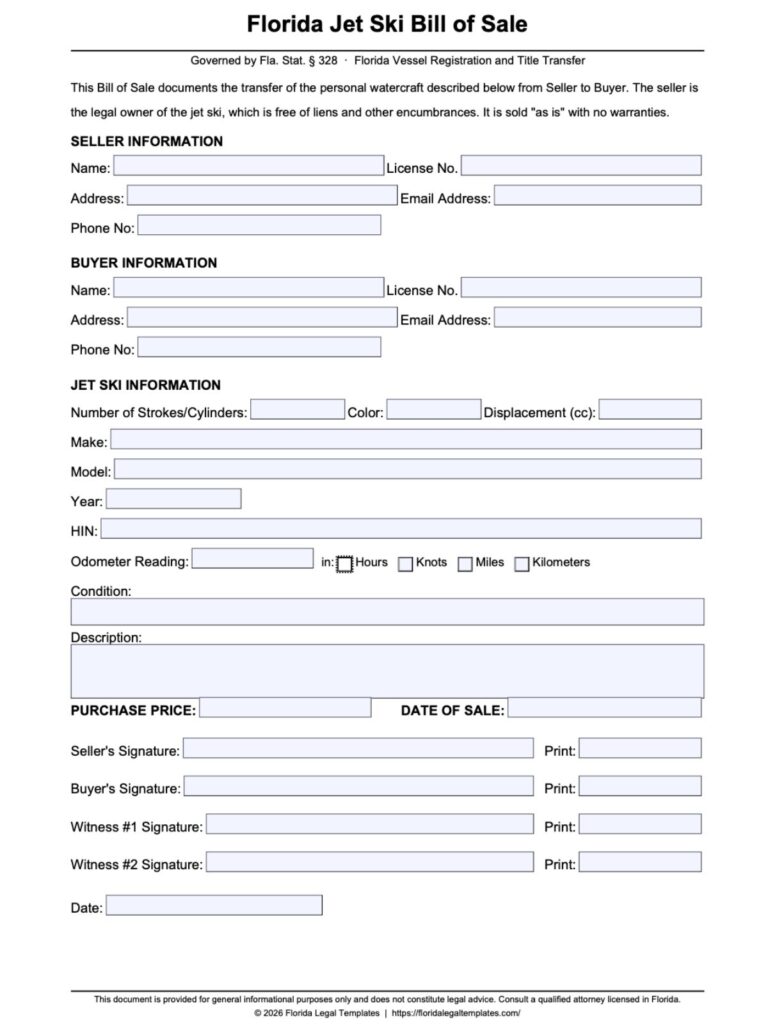
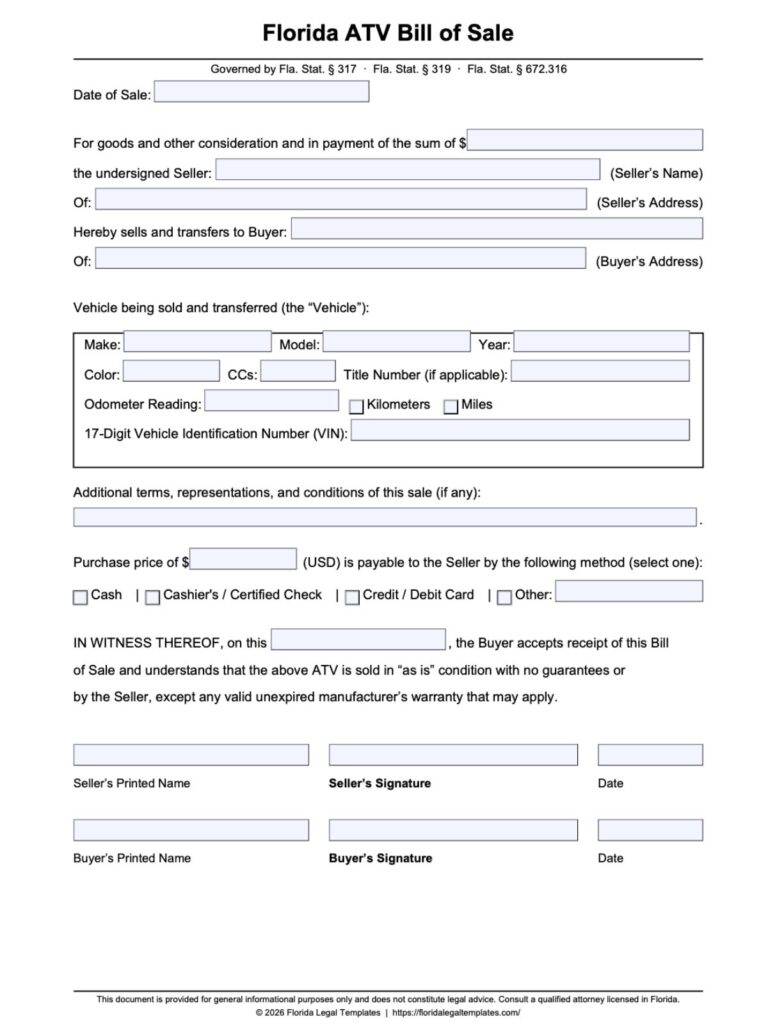
The form should describe the transaction accurately. Depending on the sale, that may include the names of the buyer and seller, the date of sale, the purchase price, a description of the property, and any terms the parties have agreed to. For titled vehicles and vessels, make sure the information matches the relevant ownership documents.

What Does a Bill of Sale Do?

A bill of sale creates a written record of a transaction. It can help the parties confirm what was sold, when the sale took place, and how much the buyer agreed to pay. If questions arise later about the terms of the transaction, the document may help establish what the parties recorded at the time of sale.

Whether a bill of sale is legally binding depends on the circumstances, including the agreement between the parties and the applicable law. The document does not automatically replace every other requirement associated with a transaction. For example, transferring a titled vehicle or vessel may involve additional title, registration, tax, or agency paperwork.

If you want to understand how these agreements work, read our guide to when a Florida bill of sale is legally binding.

Vehicle, Boat, and Trailer Sales in Florida

Vehicle and recreational property sales deserve particular attention because a bill of sale may be only one part of the paperwork. A car, motorcycle, RV, trailer, boat, or personal watercraft may have separate title or registration requirements. The steps depend on the type of property and its legal classification.

Before completing a sale, check whether the property has a title and whether the title information is accurate. If a vehicle title has been lost, our Florida lost title application guide explains the HSMV 82101 form and the process to consider when seeking a duplicate title.

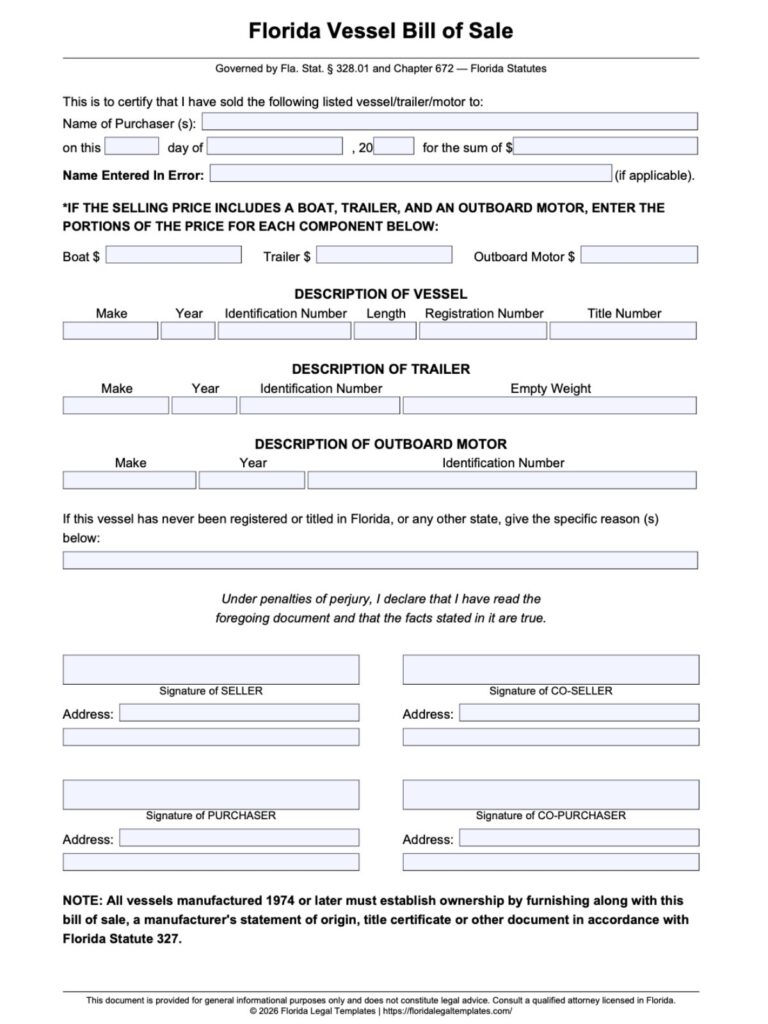
For boats and other vessels, distinguish between the bill of sale and any required title or registration documents. A signed bill of sale should not be assumed to complete every step of an ownership transfer.

Selling Property As Is

Some sellers offer property in its existing condition rather than agreeing to make repairs or provide particular warranties. An as-is bill of sale can record the parties’ agreement about the condition of the property, but the wording matters.

Do not assume that adding the words “as is” removes every possible legal obligation. The effect of a clause depends on the transaction, the language used, and the applicable law. Buyers should inspect the property and review the agreement before signing, while sellers should describe the transaction honestly and avoid making promises that conflict with the written terms.

For a Florida motor vehicle, the bill of sale is not a substitute for the certificate of title. Florida Statutes § 319.22 addresses the transfer of motor vehicle ownership, while § 319.23 governs applications for certificates of title. Boat buyers and sellers should check the separate vessel requirements under Chapter 328 before treating the sale as complete.

Before You Sign a Florida Bill of Sale

Take a moment to review the document before the transaction is completed. Confirm that the buyer’s and seller’s details are correct, the property is clearly identified, and the price and payment terms match the agreement. Correct mistakes before signing, and make sure both parties receive a copy for their records.

Check separately whether the transaction requires a title transfer, registration, tax payment, or another document. Notarization is not a universal requirement for every bill of sale, so follow the rules that apply to the specific property and transaction.

The guides on this page explain different Florida bill of sale forms and related paperwork. Choose the one that matches your transaction, and consult the relevant Florida agency instructions when official title or registration procedures apply.

These materials are provided for general informational purposes and are not a substitute for legal advice. If a sale involves a dispute over ownership, significant financial interests, or uncertainty about the terms of the agreement, consider speaking with a qualified Florida attorney.