Business Contracts

Business relationships often start with a simple understanding: one person will provide a service, two people will run a business together, or a buyer will purchase a company. Putting that understanding in writing helps everyone know what they have agreed to and what happens if something goes wrong.

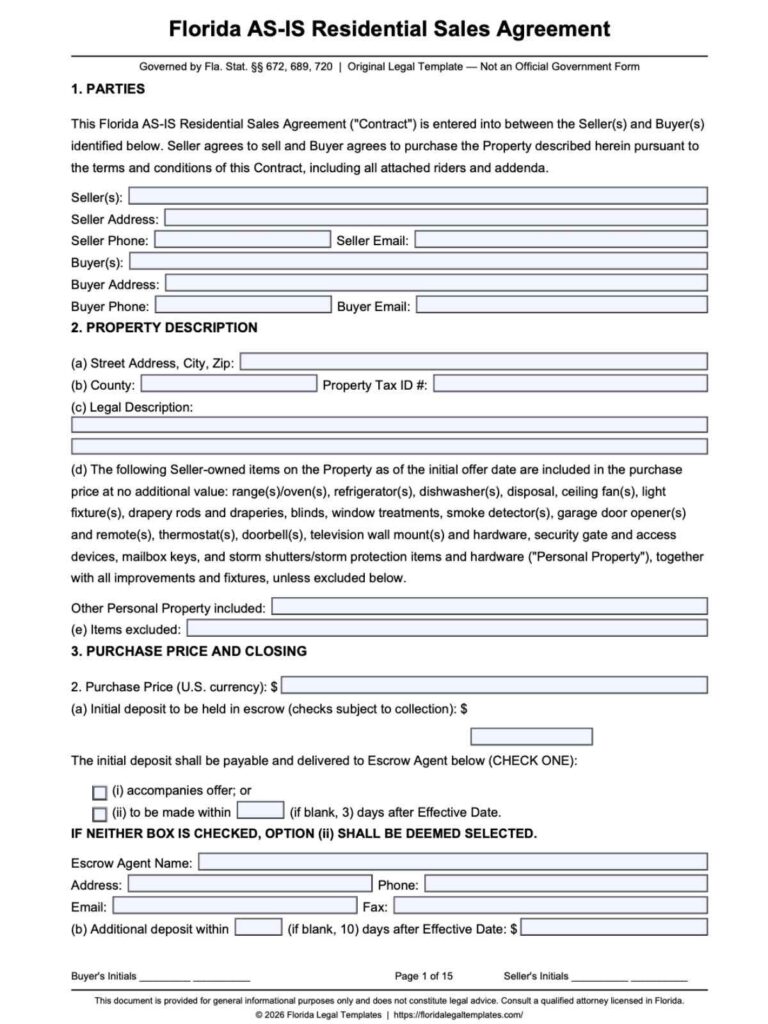
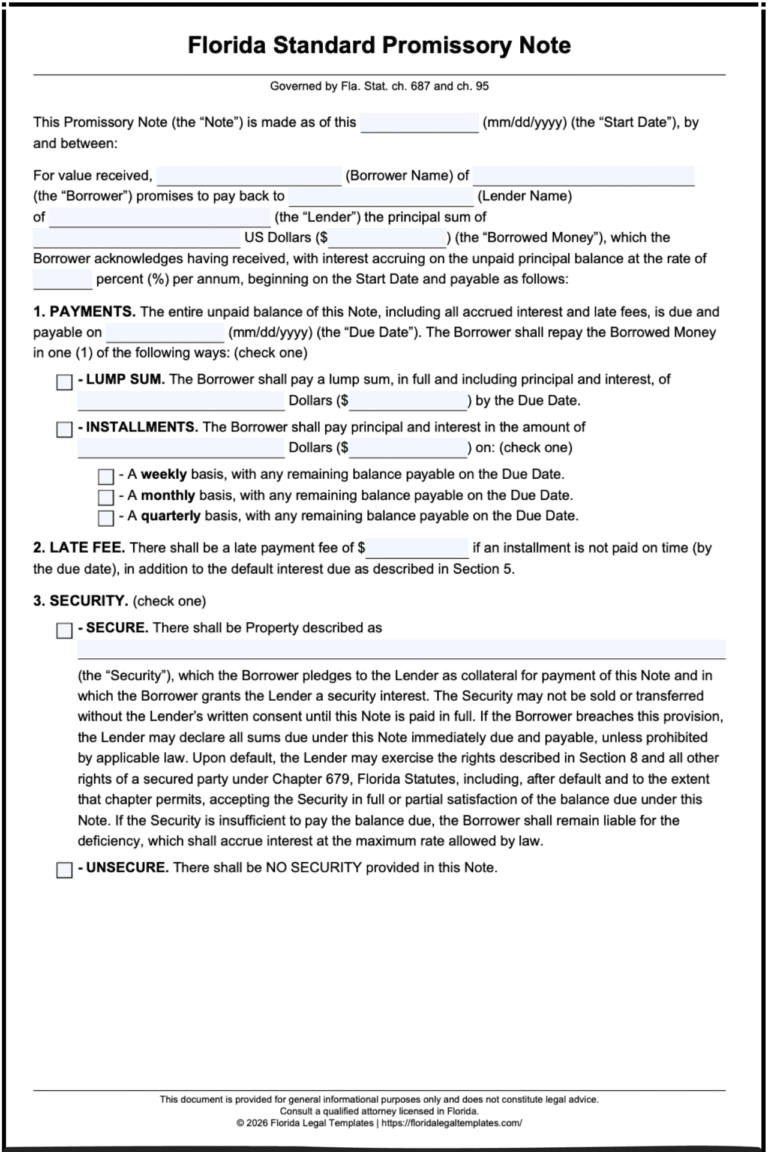
Florida businesses and individuals use different agreements for different purposes. A consulting arrangement is not the same as an employment contract, and an agreement to buy a business raises different questions from a loan between two parties. This collection brings together Florida business contract templates and guides covering services, sales, partnerships, confidentiality, employment, and other common transactions.

Find the Right Business Contract

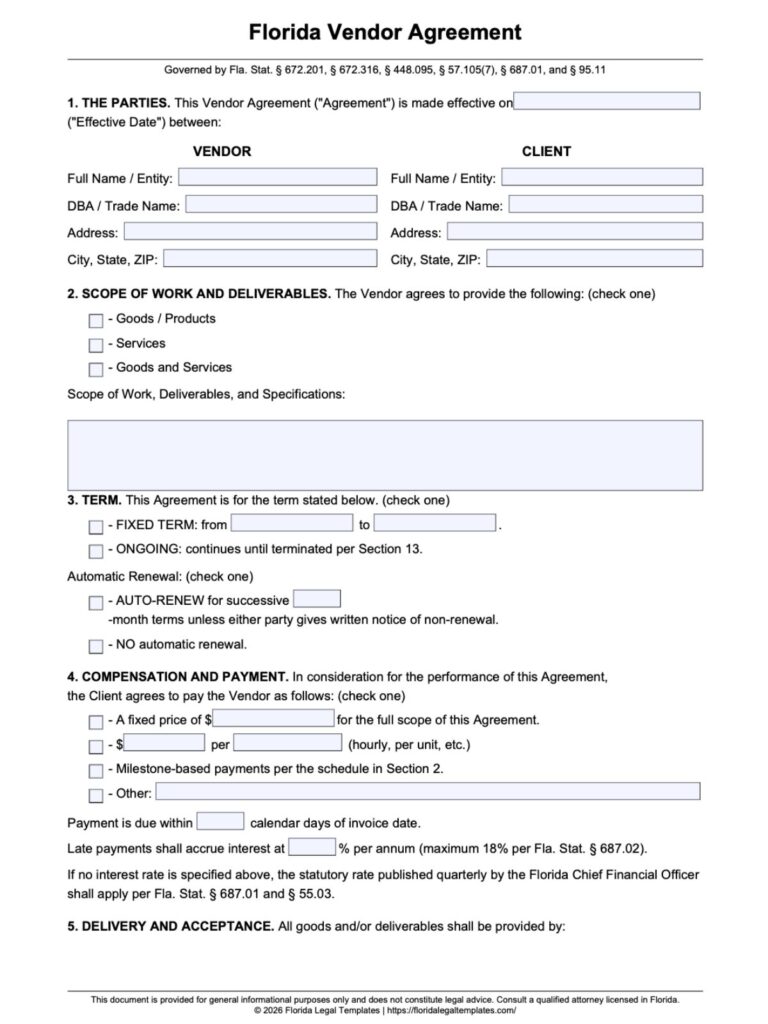
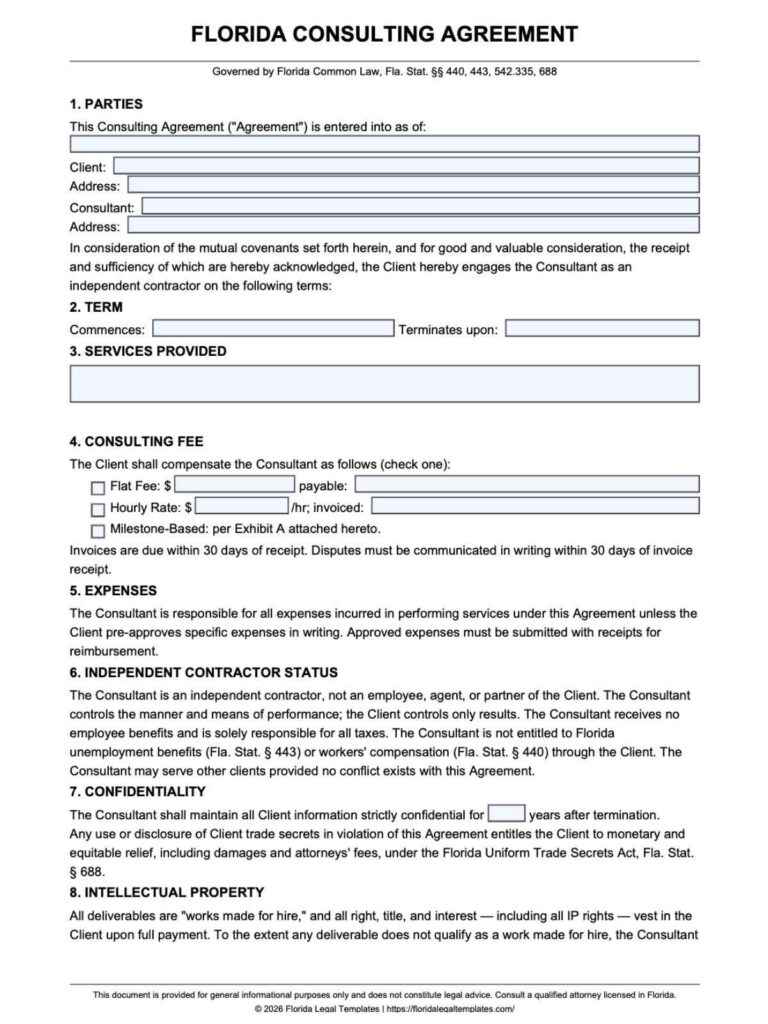
The right agreement depends on the relationship and the transaction. If you’re hiring a consultant or an independent contractor, start with an agreement that describes the work, payment terms, deadlines, and responsibilities of each party. A vendor or service agreement may be more suitable when a business hires a supplier or another company to perform ongoing work.

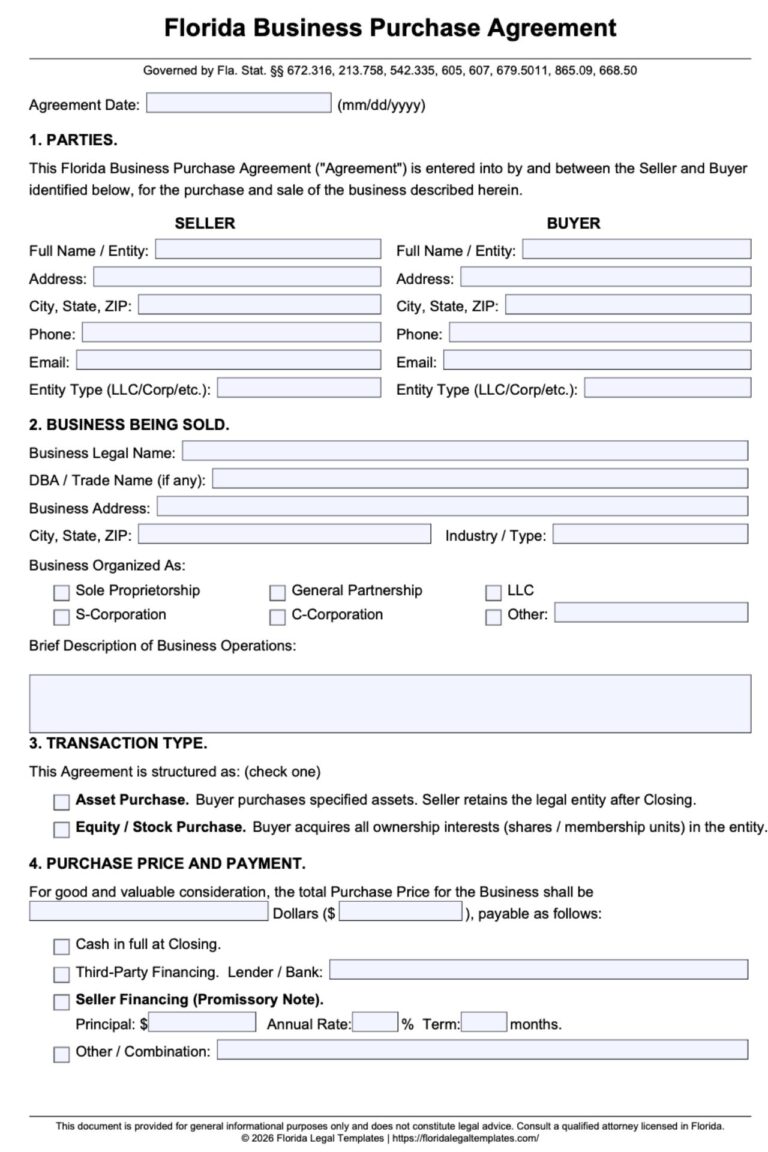
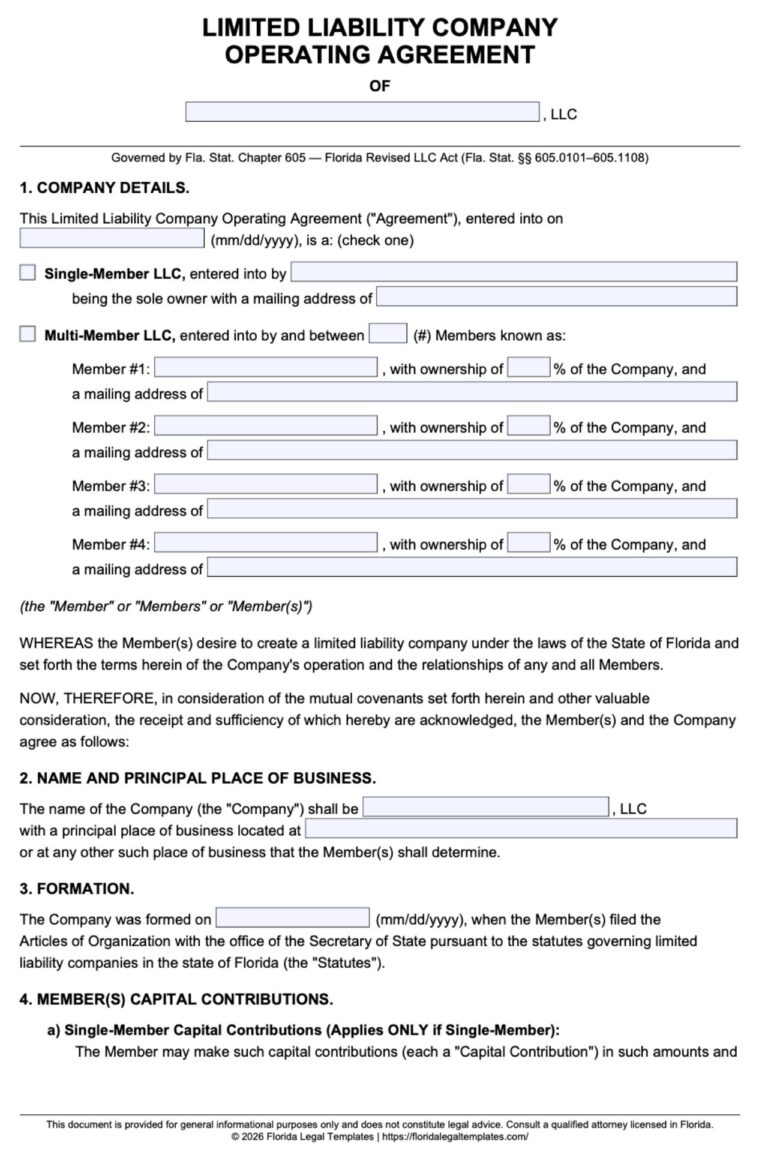
If you’re starting a business with someone else, a partnership agreement or LLC operating agreement can help document how the business will be managed, how decisions will be made, and how profits or losses will be handled. Someone buying or selling a business may need a business purchase agreement that addresses the assets or ownership interests involved, the purchase price, and the responsibilities of both sides.

This category also includes agreements for loans, sales of goods, employment, confidentiality, contract amendments, and other business arrangements. Choose the guide that matches your situation rather than relying on a general contract simply because it seems easier to use.

What Should a Business Contract Include?

Every agreement should clearly identify the parties and explain what each party has agreed to do. Depending on the transaction, important terms may include:

  • Scope of work or transaction: Describe the services, goods, business interests, or other subject matter covered by the agreement.
  • Payment terms: State the amount due, payment schedule, accepted methods, and any agreed conditions for additional charges or expenses.
  • Timing and responsibilities: Set out deadlines, delivery dates, performance expectations, and each party’s obligations.
  • Changes and termination: Explain how the parties can amend the agreement and when either party may end it.
  • Disputes and liability: Address responsibility for losses, applicable dispute procedures, and any indemnification or limitation-of-liability provisions appropriate to the transaction.

Not every contract needs the same clauses. The terms should reflect the actual arrangement, and both parties should understand their obligations before signing.

Changing an Existing Contract

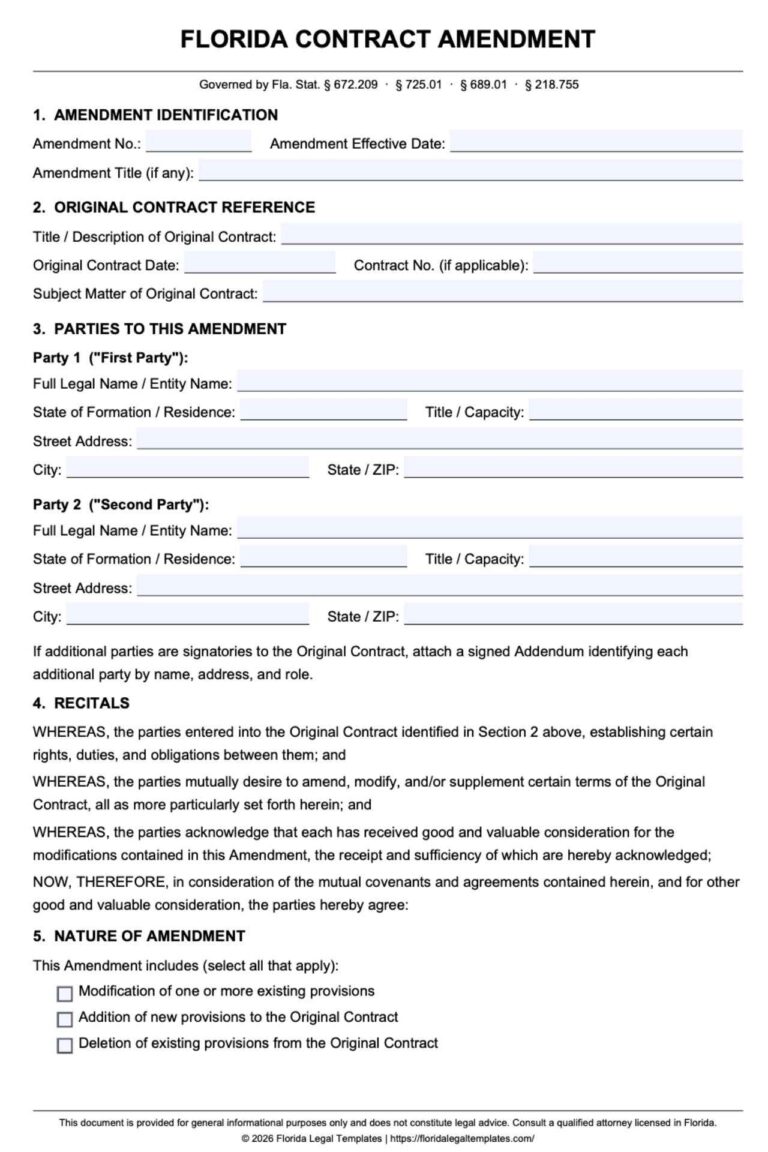
Sometimes the parties agree to change a deadline, payment amount, service requirement, or another term after signing a contract. A written amendment can record the change and identify the original agreement it modifies. Before signing an amendment, review the existing contract for provisions governing changes, approvals, and required signatures.

Our Florida contract amendment guide explains the points to consider when documenting an agreed change. Avoid relying on informal messages alone when the original agreement or applicable law requires a particular amendment process.

Confidentiality, Hiring, and Business Relationships

Some agreements address information or working relationships rather than a straightforward sale. A nondisclosure agreement, for example, may establish how confidential information can be used or shared. Employment and independent contractor agreements serve different purposes, so the parties should consider the actual working arrangement rather than relying only on the document’s title.

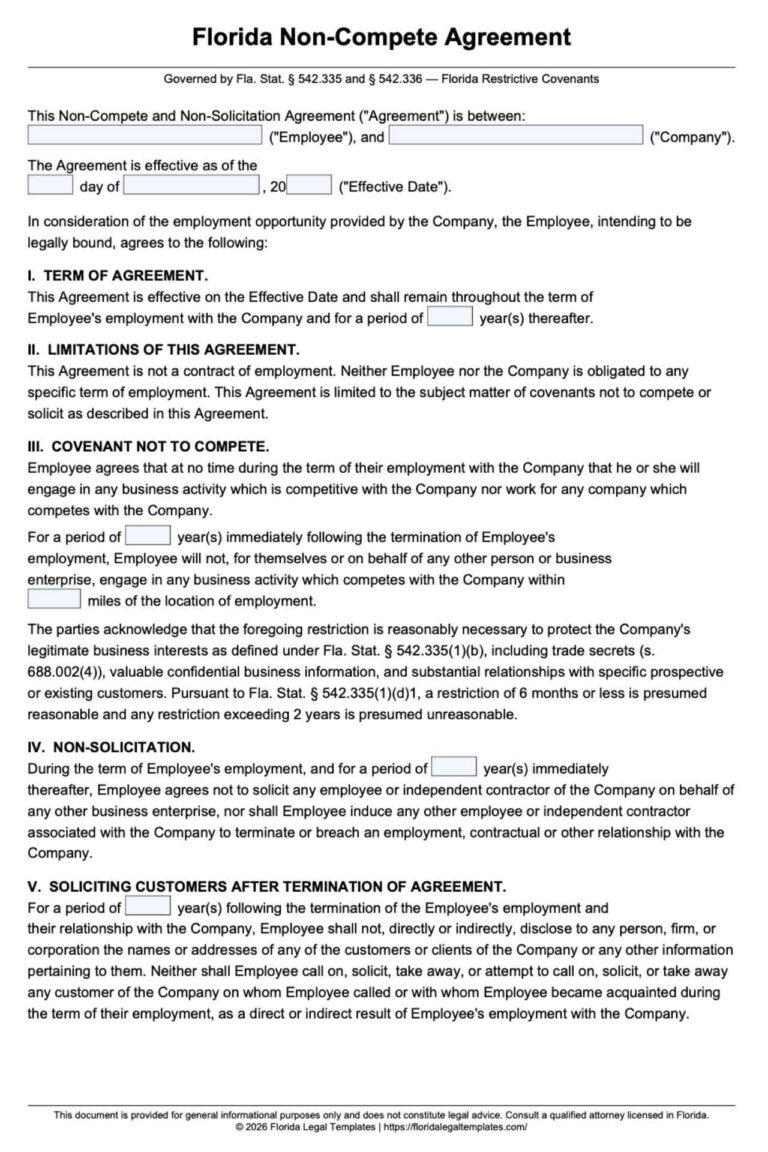
Restrictive covenants, including non-compete provisions, require particular care under Florida law. Under Fla. Stat. § 542.335, a party seeking to enforce a restrictive covenant generally must establish a legitimate business interest and show that the restriction is reasonably necessary to protect it. Whether a particular provision is enforceable depends on the agreement and the circumstances.

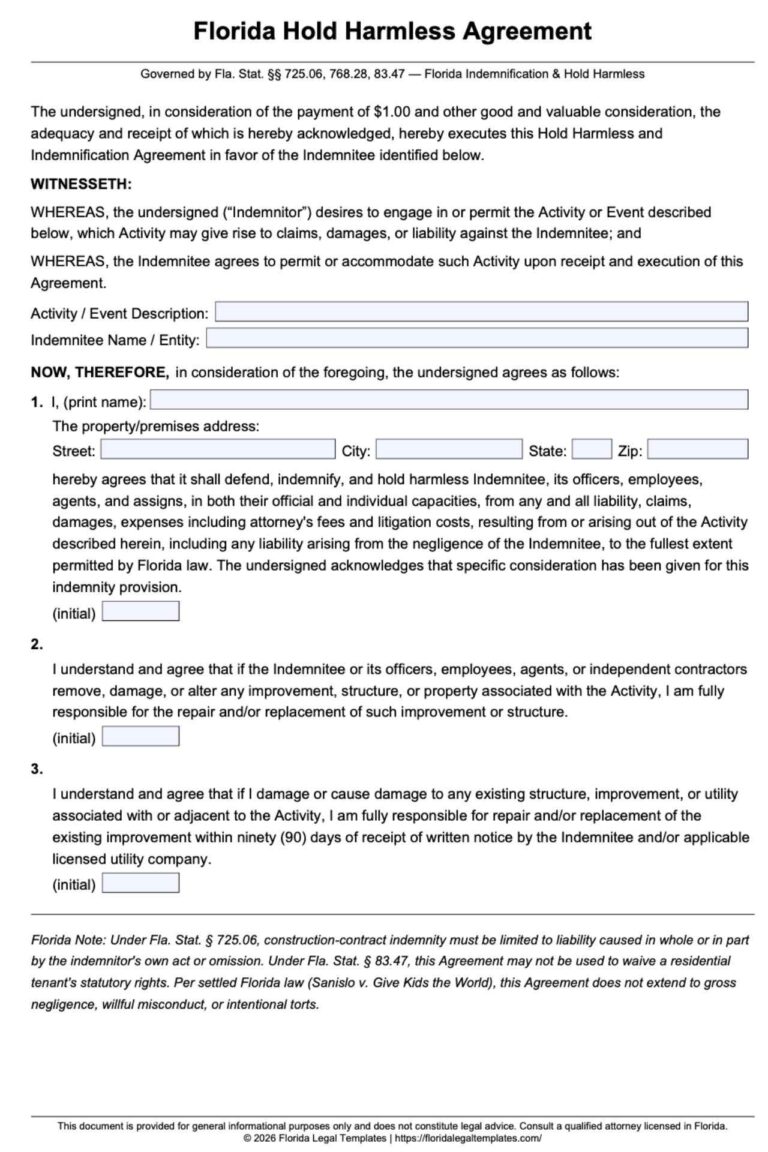
A hold harmless agreement may also affect how the parties allocate certain risks. Read these terms closely before agreeing to them, especially when they could restrict future work or create financial obligations.

Before You Sign a Florida Contract

Before signing, check that the agreement reflects the terms both parties accepted and that all exhibits or attachments are included. Florida law also requires a signed writing for certain agreements under Fla. Stat. § 725.01, including contracts for the sale of land and agreements that cannot be performed within one year. If your transaction falls into one of these categories, make sure the agreement meets the applicable requirements.

A signed document is not automatically enforceable in every circumstance. The result may depend on the contract’s terms, how it was formed, applicable Florida law, and any requirements specific to the transaction. Some arrangements may also involve statutory rules or formalities that a general template cannot address.

Use the individual guides in this category to learn about the agreement that fits your needs and the issues to review before completing it. For a significant business purchase, employment arrangement, restrictive covenant, or contract involving substantial financial risk, consider having a qualified Florida attorney review the terms.

These resources provide general legal information and are not a substitute for advice tailored to your circumstances.