
Affidavits and Legal Declarations

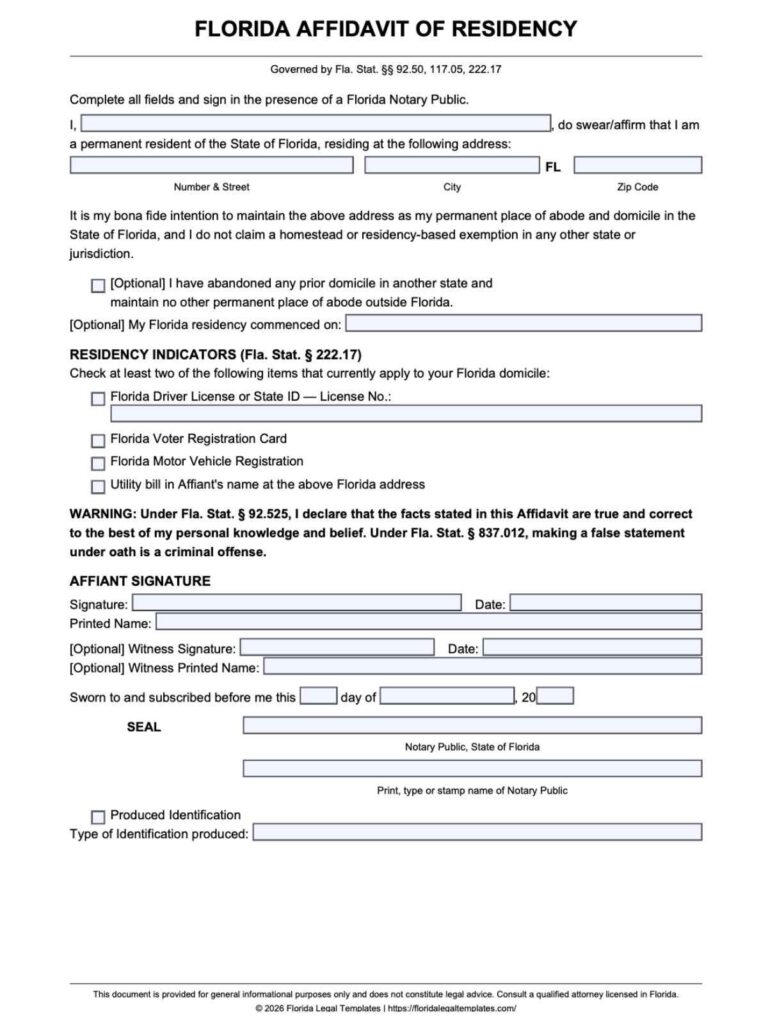
Sometimes, a legal or administrative matter requires you to put certain facts in writing. You might need to confirm where you live, explain how property was transferred, provide financial information in a family court case, or submit documents as part of an estate proceeding. In Florida, the affidavit or declaration you need depends on what you’re trying to establish and the requirements of the person or agency receiving it.

This page brings together our guides to Florida affidavits and legal declarations. Whether you’re looking for a general affidavit, a financial affidavit for a family law matter, or a document related to probate or a vehicle transaction, you can use the resources below to understand your options before completing a form.

Which Florida Affidavit Do You Need?

Start with the reason you need the document. A general affidavit may help when you need to make a sworn statement about particular facts. Other situations call for a more specific form, and using a general template when a court or agency requires a particular document could cause delays.

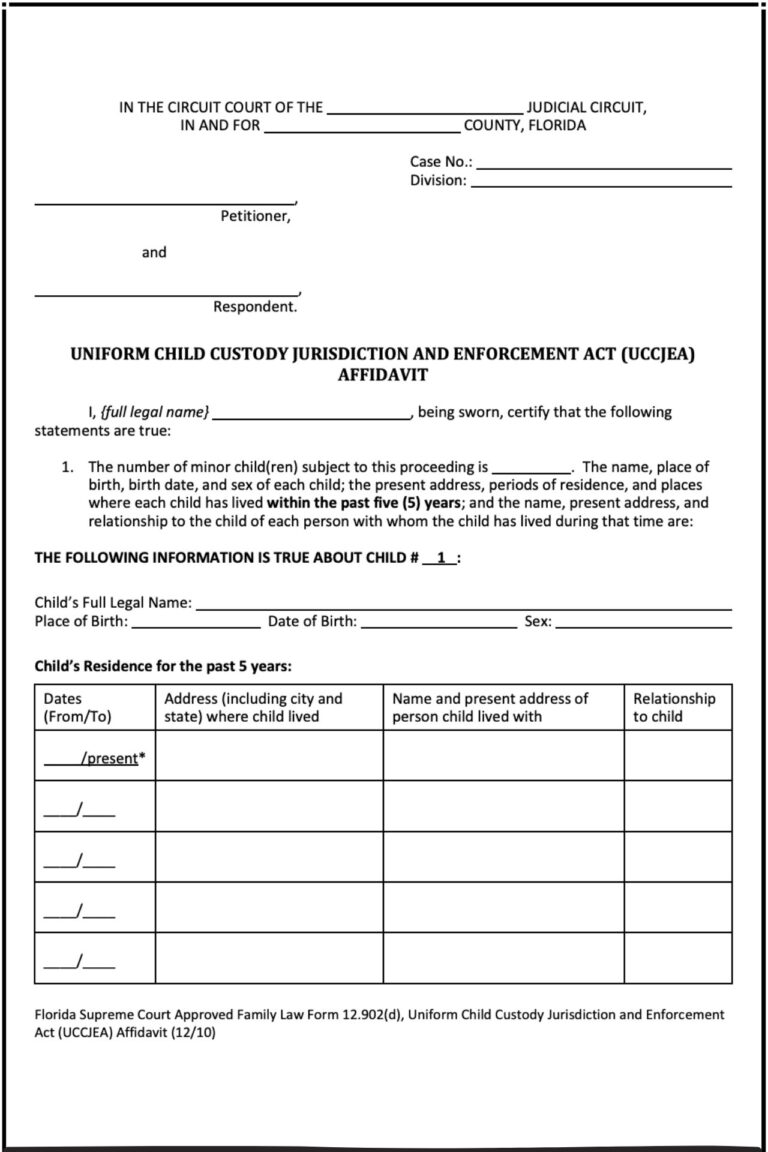
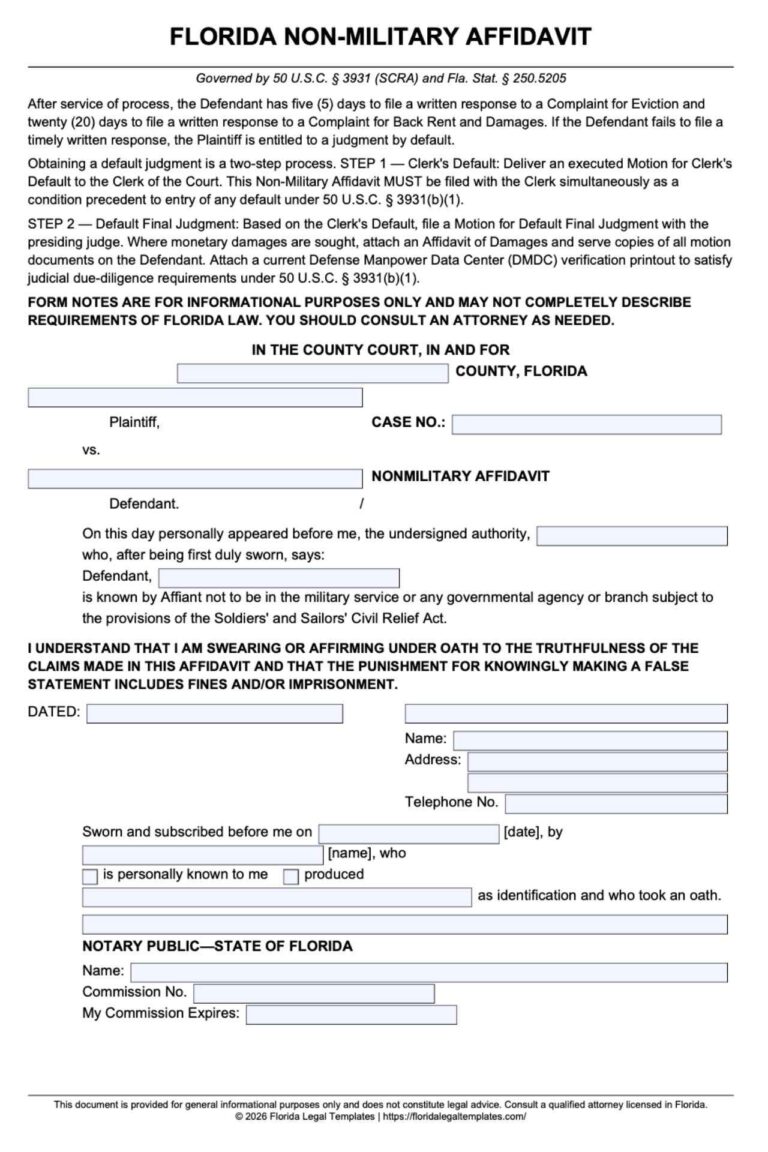
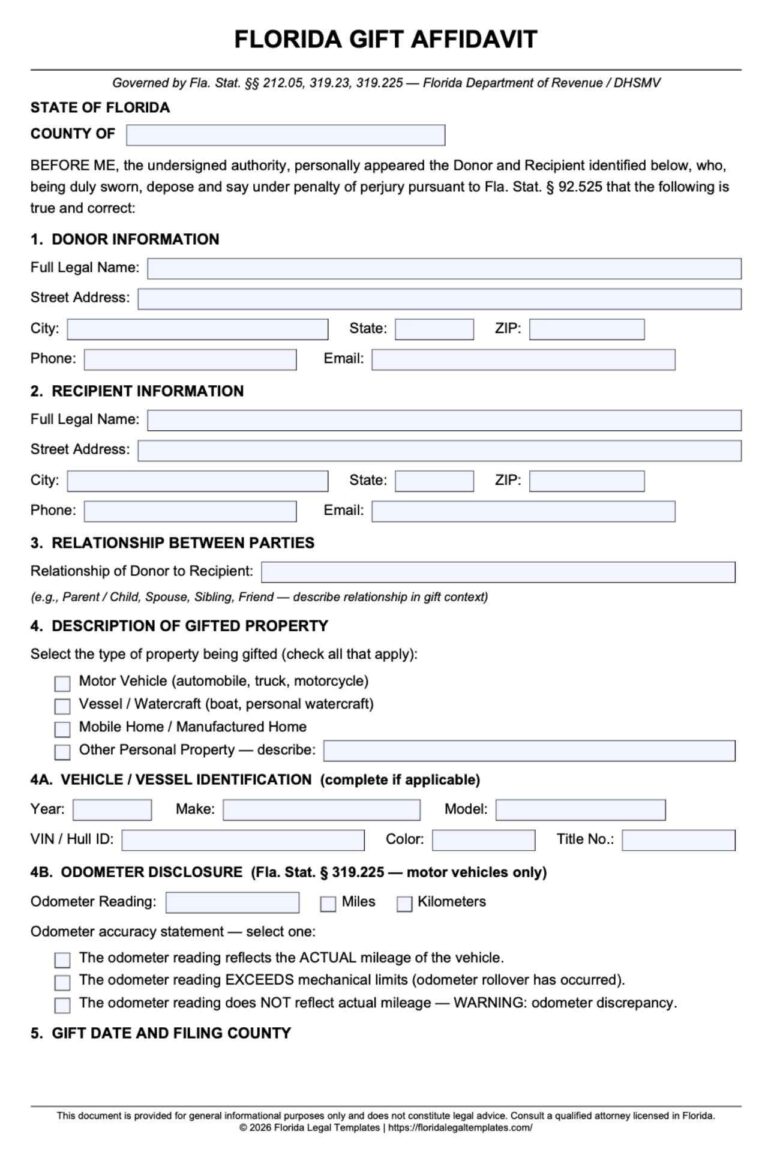
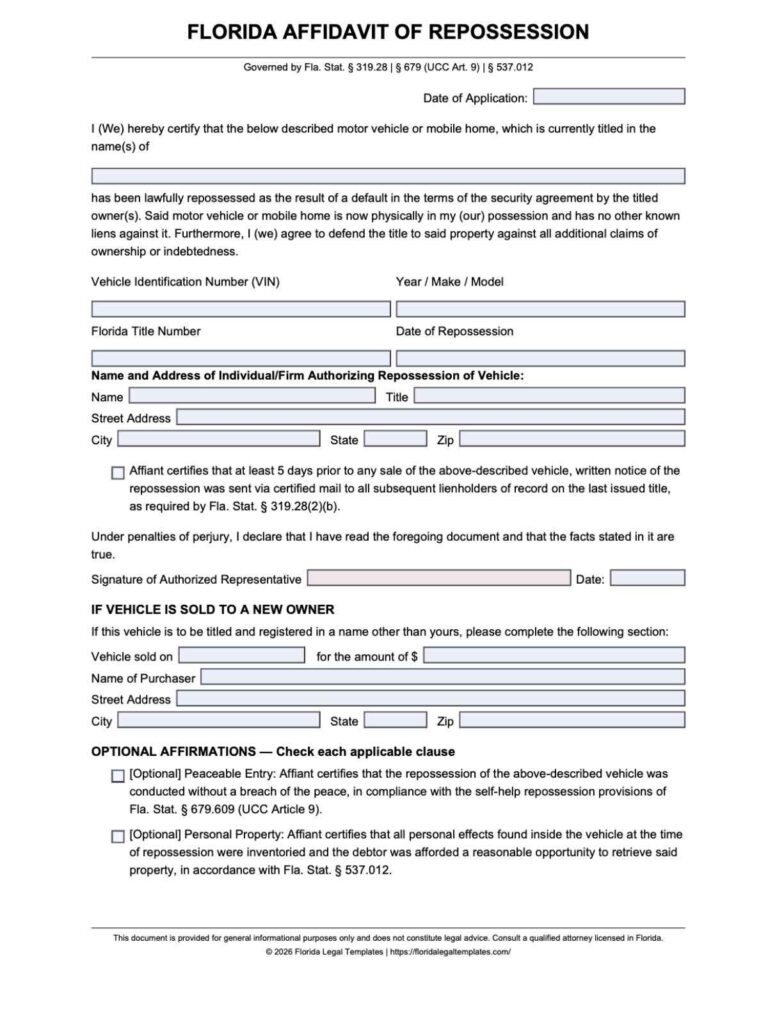
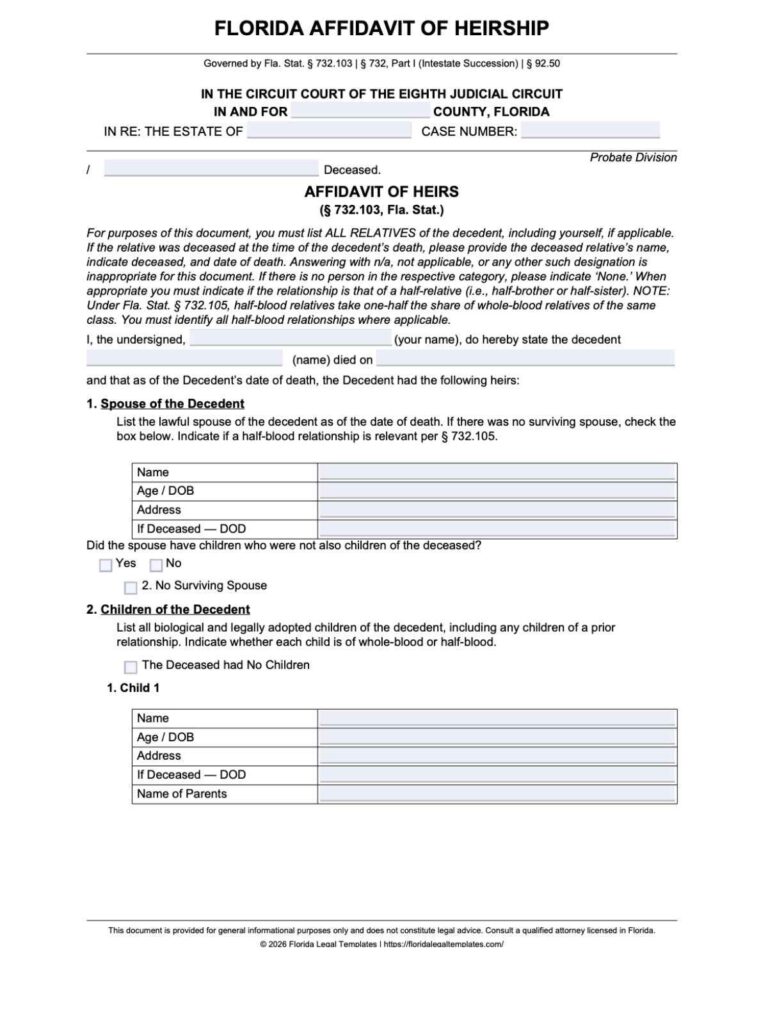
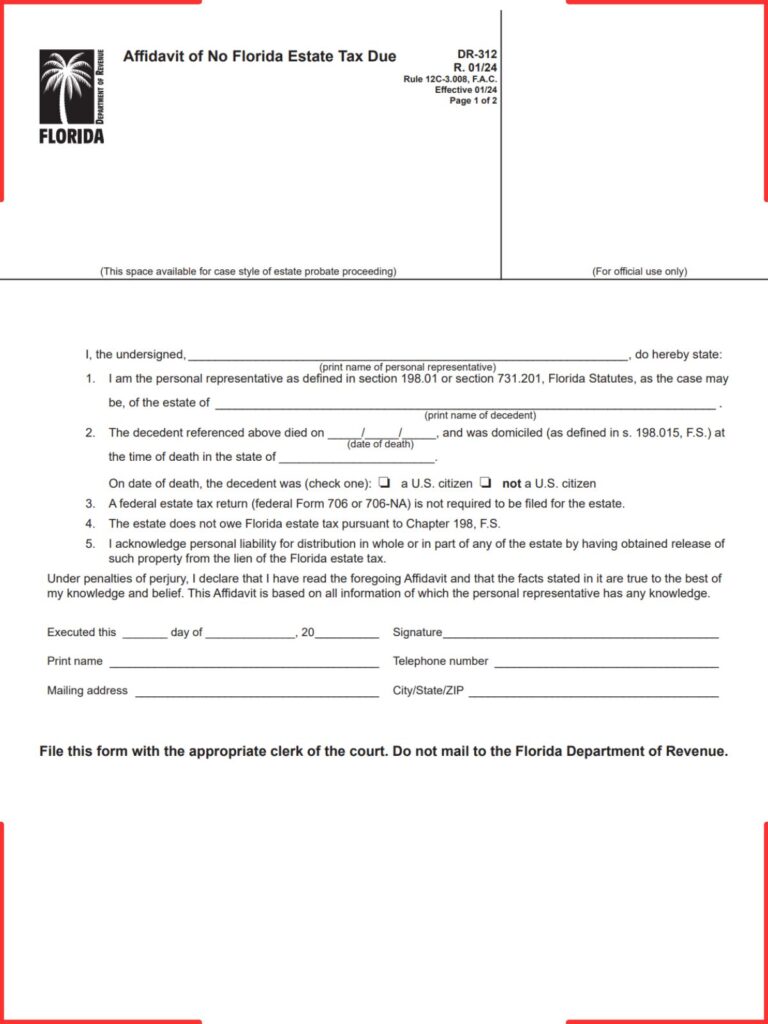
For family law matters, you can read our guides to Florida financial affidavits and UCCJEA affidavits. If you’re dealing with a will or an estate, our resources cover self-proving affidavits, affidavits of heirship, small estate procedures, and the affidavit of no Florida estate tax due. For vehicle and property matters, we also explain documents used for gifts, title corrections, and repossessions.

If you’re unsure where to begin, the general Florida affidavit guide is a useful starting point. From there, choose the guide that best matches your circumstances and check whether the organization receiving your paperwork provides its own form.

What Should You Check Before Signing?

Read the form carefully before filling it out. Depending on the purpose of the affidavit, you may need to provide names, dates, addresses, financial details, property information, or supporting records. Make sure the information is accurate and consistent with any documents you’re submitting alongside it.

Pay particular attention to the signing requirements. Some affidavits must be signed under oath or affirmation before a notary or another authorized officer. Other documents may follow different rules. Do not assume that every affidavit has the same notarization requirements; check the instructions for your particular form and intended use.

An affidavit is a formal statement, not just a routine form to sign. False statements can have legal consequences, so include only information you believe to be true and can support when necessary.

Do Florida Affidavits Need to Be Notarized?

Not every document follows the same signing process. Whether notarization is required depends on the type of document, the applicable law, and the purpose for which it will be submitted. Some forms also require specific wording, signatures, or additional documentation.

Before signing, review the instructions that apply to your situation. Our guide to Florida notary requirements explains the role of a notary and the rules to consider when preparing documents that require notarization.

Find the Florida Affidavit Guide That Fits Your Situation

Use the individual guides on this page to learn about each form, the information it may require, and the rules that apply to its intended use. When a court or government agency provides an official form or specific instructions, check those materials before using a general template.

These resources provide general legal information for educational purposes. They do not replace advice from a qualified Florida attorney. If you’re dealing with a disputed estate, an ongoing court case, or a document that could affect your legal or financial rights, consider getting professional advice before submitting it.