Lease & Rental Agreements

Renting property in Florida involves more than agreeing on a monthly rent. Landlords and tenants also need to understand the terms of the lease, who is responsible for particular expenses or repairs, how notices must be given, and what happens when a tenancy ends. Putting the agreement in writing helps both parties understand their responsibilities and provides a record of the terms they accepted.

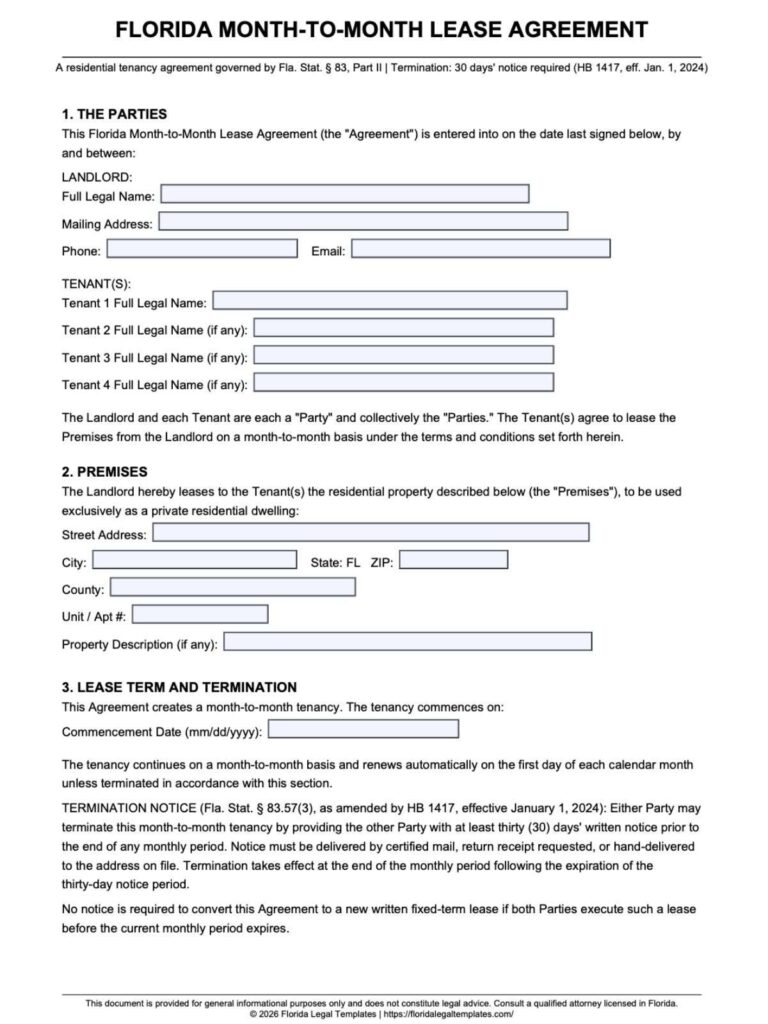
The right document depends on the property and the arrangement. A residential lease for a home or apartment is different from a commercial lease for business premises, while a month-to-month tenancy without a specific duration generally requires at least 30 days’ notice before the end of a monthly period under Fla. Stat. § 83.57(3). This collection brings together Florida lease and rental agreement templates, notices, and legal guides to help you find the paperwork relevant to your situation.

Choose the Right Florida Rental Agreement

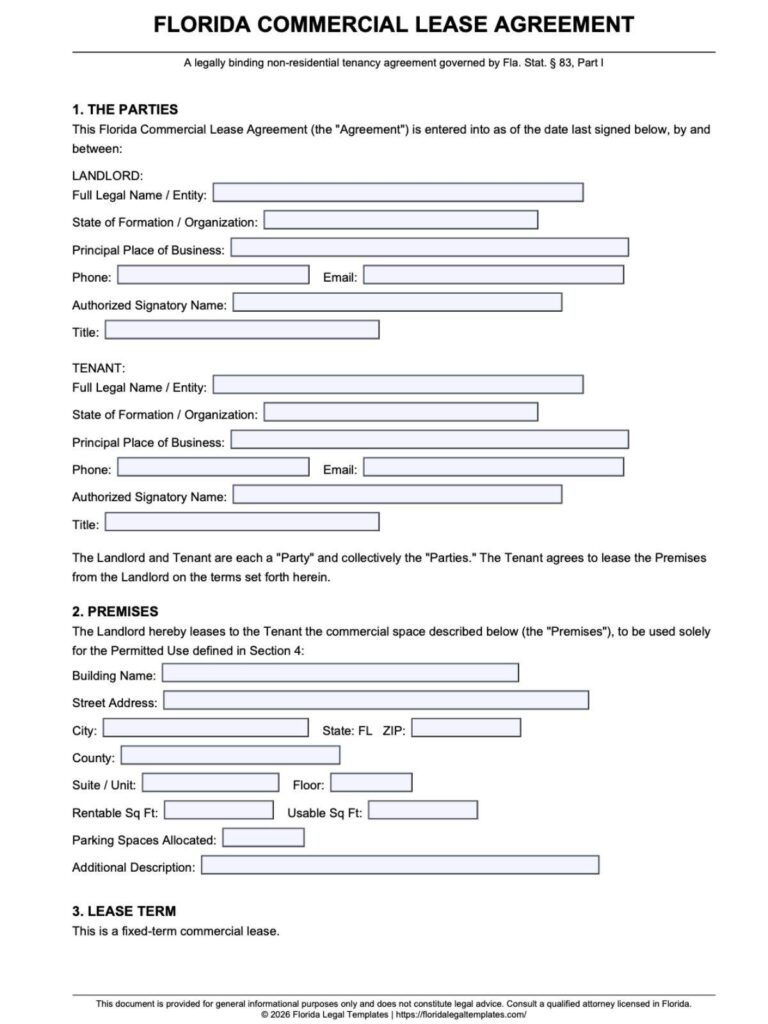
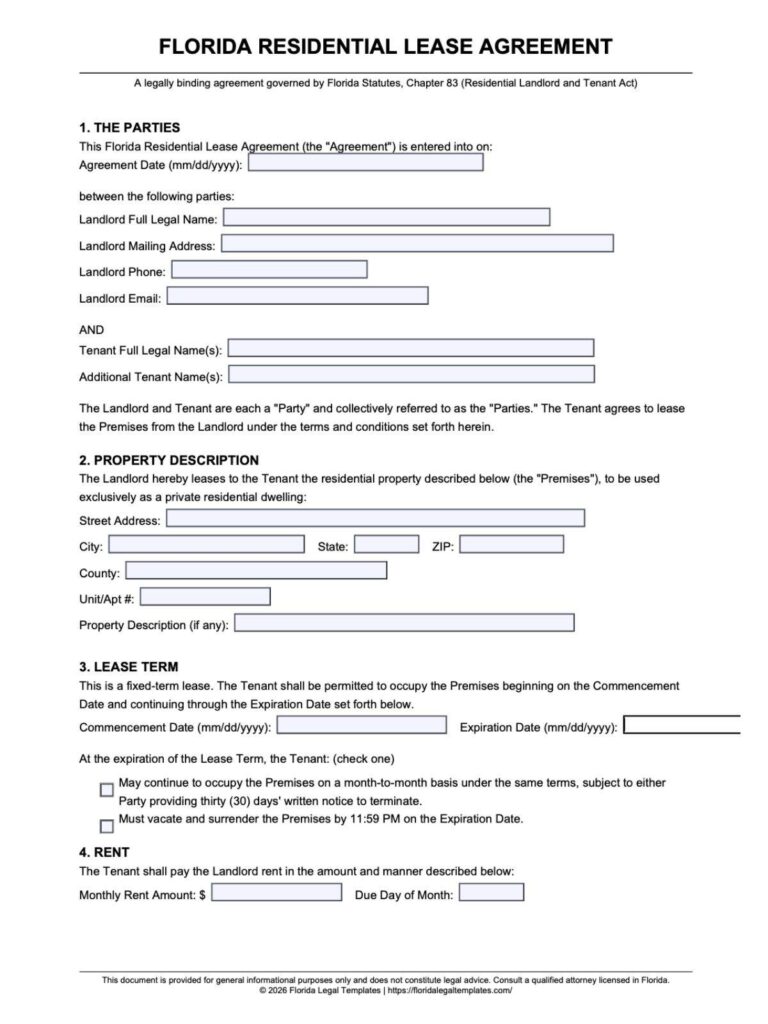
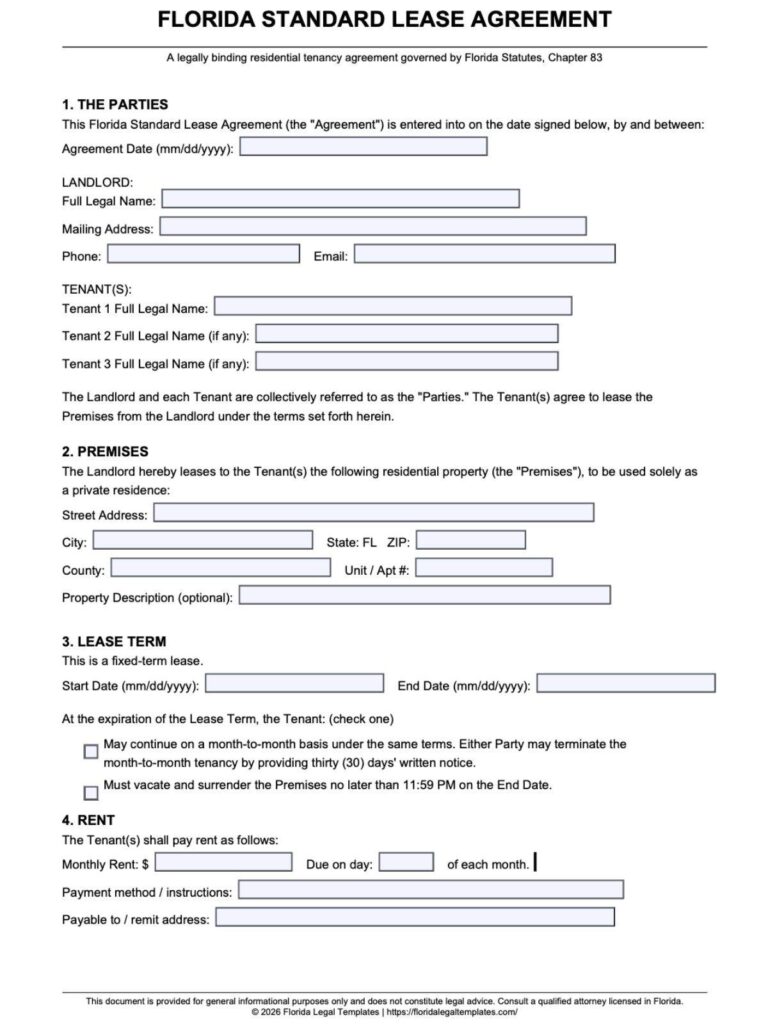
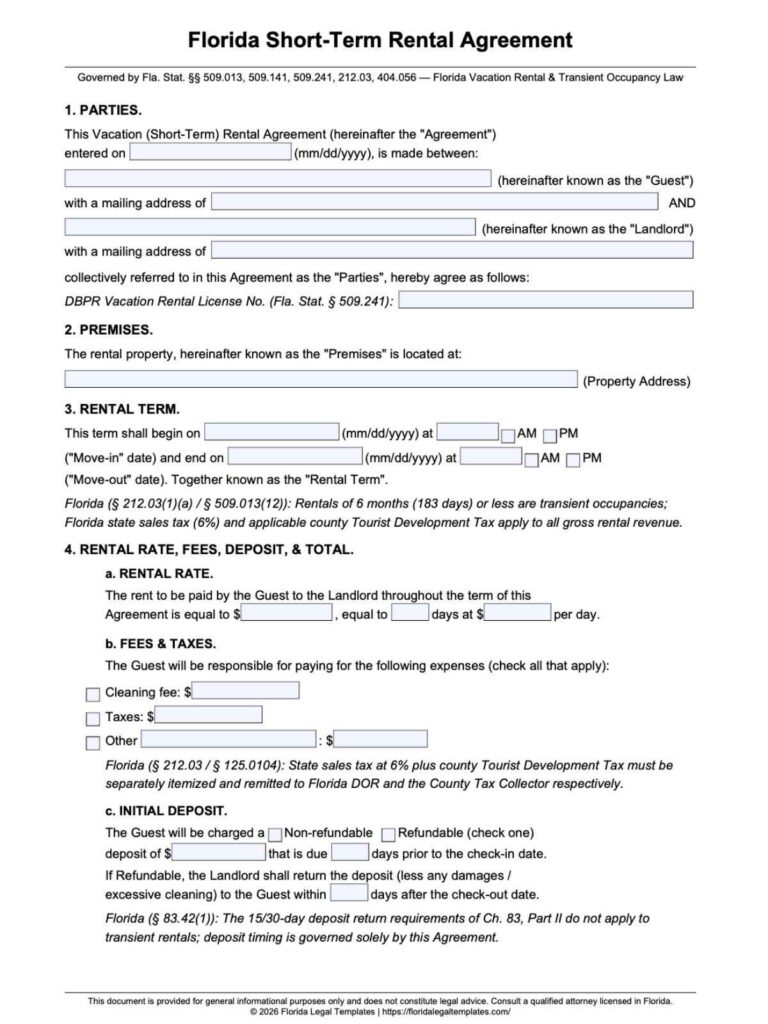
Start by considering the type of property being rented and how long the arrangement is expected to last. A Florida residential lease agreement is commonly used for a house or apartment, while a commercial lease covers premises rented for business purposes. A short-term vacation rental agreement addresses temporary stays, and a room rental agreement can be useful when someone rents an individual room rather than an entire property.

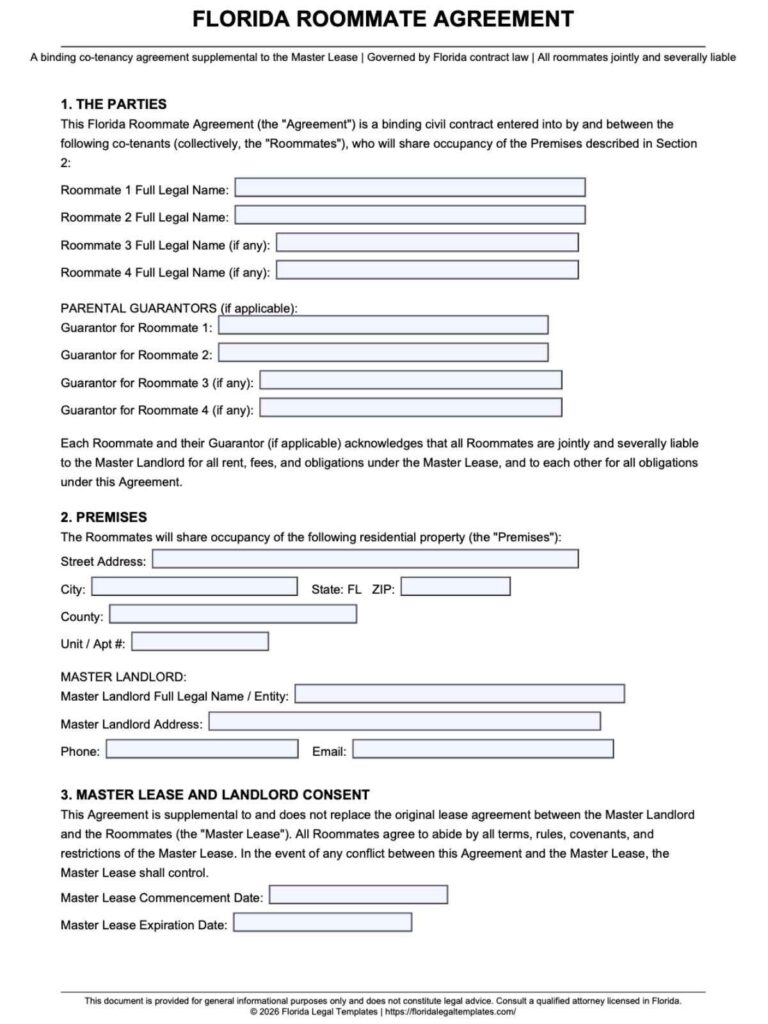
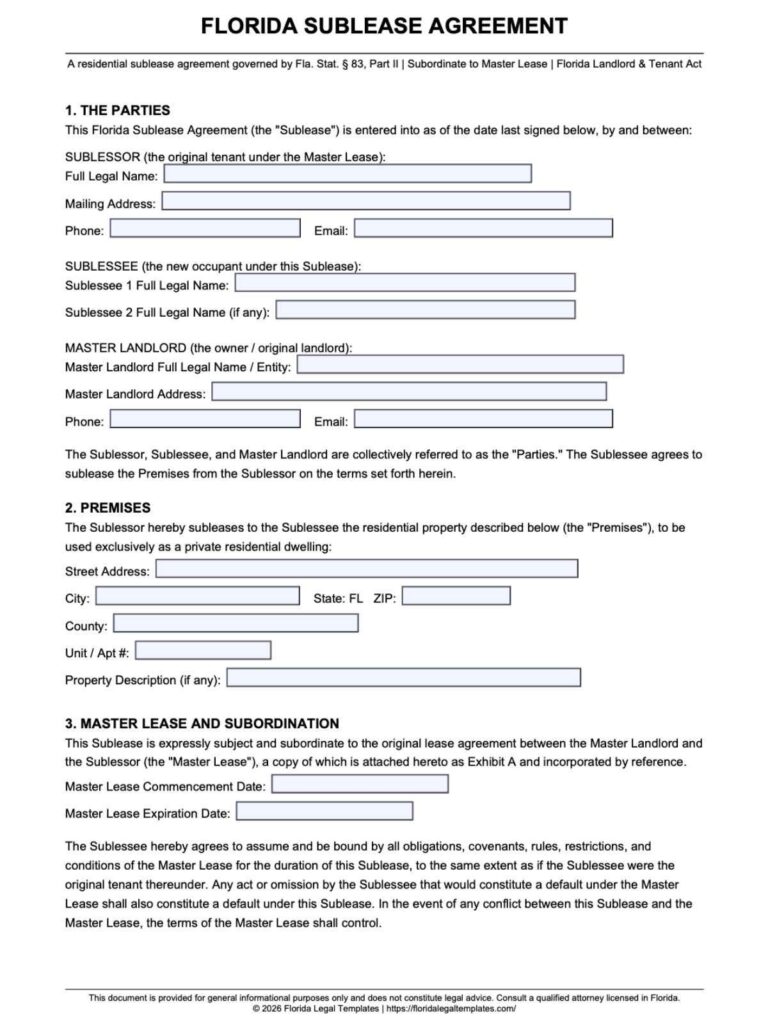
Shared living arrangements may call for a roommate agreement that explains how occupants will divide rent, utilities, household expenses, and other responsibilities. If a tenant wants to rent the property to someone else for part of the lease term, a sublease agreement may be relevant, subject to the original lease and applicable requirements.

Choosing the right Florida rental form starts with the type of property and the length of the tenancy. For example, a month-to-month residential tenancy without a specific duration generally requires at least 30 days’ notice before the end of a monthly period under Fla. Stat. § 83.57(3), so check that the form fits the arrangement before signing.

What Should a Florida Lease Include?

A lease should clearly identify the landlord and tenant, describe the rental property, and state the amount of rent and when it is due. It should also address the length of the tenancy, security deposit arrangements, responsibility for utilities and maintenance, and any rules that apply to the use of the property. For residential rental agreements lasting one year or longer, Florida law also requires a separate flood disclosure at or before signing.

Other terms may cover late payments, pets, parking, occupancy, entry to the property, and procedures for renewing or ending the lease. The appropriate provisions depend on the rental arrangement and must be consistent with applicable Florida law.

Read the agreement before signing and make sure you understand the obligations it creates. If the parties later agree to change a term, a written lease addendum or amendment may be appropriate. A lease renewal agreement can document an extension or a new rental term, depending on the circumstances.

Security Deposits and Rental Payments

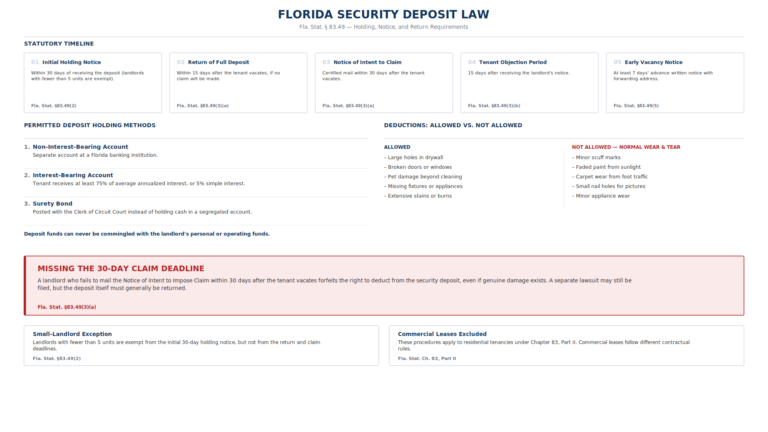
Security deposits are a common source of questions for Florida landlords and tenants. Before paying or collecting a deposit, understand how it will be handled, what notices may be required, and what rules apply when the tenancy ends. Florida law sets specific requirements for residential security deposits under Fla. Stat. § 83.49. Generally, a landlord must return the deposit within 15 days after the tenancy ends if no claim is intended, or give written notice of an intended claim within 30 days. A tenant generally has 15 days after receiving that notice to object.

Keep records of the amount paid, the date of payment, and any relevant communication about the deposit. A rent receipt can also help document rental payments, particularly when payment is made by a method that does not automatically provide a clear record.

Our guide to Florida security deposit law explains the main issues to consider. The details matter because a landlord’s obligations may depend on the circumstances and compliance with the applicable statutory procedures.

Ending or Changing a Rental Agreement

A tenancy may end because a fixed lease term expires, the parties agree to end the arrangement, or one party gives the required notice. The correct procedure depends on the lease, the type of tenancy, and the reason for ending it.

A lease termination letter can help document a party’s intention to end a rental arrangement. A notice to vacate may be appropriate in certain circumstances, but the required notice period and wording depend on the situation. For example, a month-to-month tenancy without a specific duration generally requires at least 30 days’ notice before the end of a monthly period, while notices for lease violations are governed by different rules under Fla. Stat. § 83.56. Before sending a notice, check the lease and the rules that apply to the tenancy.

If the parties want to continue renting after the current term, a lease renewal agreement may record the new arrangement. If a landlord wants to end a tenancy before the agreed term, additional legal considerations may apply. Our guide to early lease termination by a landlord in Florida explains why the circumstances and applicable law must be reviewed before taking action.

Florida Eviction Notices and the Eviction Process

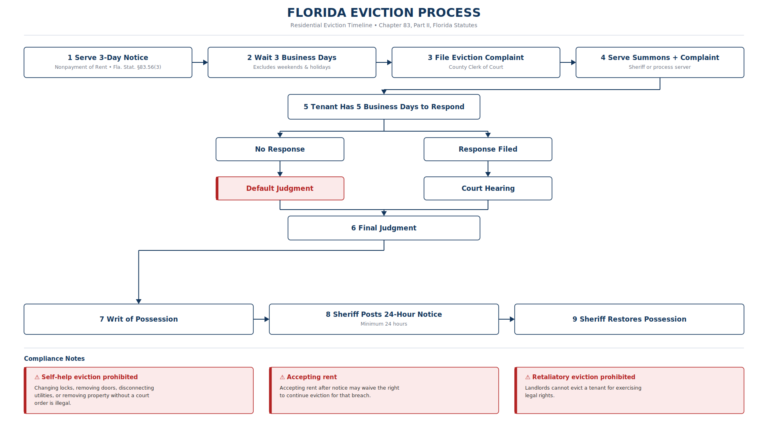
Eviction is a legal process, not simply a matter of asking a tenant to leave. Florida law establishes procedures that landlords must follow, and the notice required depends on the reason for the eviction. For example, a qualifying nonpayment-of-rent notice generally gives a tenant three days to pay or surrender possession, excluding Saturdays, Sundays, and court-observed legal holidays, under Fla. Stat. § 83.56(3). Different situations may involve different notice periods and opportunities to address the issue.

A notice that is inappropriate for the circumstances or does not comply with the applicable requirements can create problems and delay the process. Landlords should check the relevant statutory requirements before serving a notice, while tenants should read any notice they receive and pay attention to stated deadlines.

Our Florida eviction notice guide and eviction process overview explain the documents and general steps involved. Because eviction proceedings can affect a person’s housing and legal rights, consider seeking legal assistance if you are unsure how to respond or proceed.

Rental Applications and Other Helpful Documents

The paperwork involved in a Florida rental arrangement may begin before a lease is signed. A rental application helps a landlord assess a prospective tenant, while a rent receipt records a payment and a lease addendum documents an agreed change to the existing terms. Each document serves a different purpose, so keep copies of the signed lease, payment records, and notices throughout the tenancy.

These documents serve different purposes. A rental application is not a lease, and a rent receipt does not replace the rental agreement. Keeping copies of signed documents, payment records, notices, and important communications can help both parties maintain a clear record of the tenancy.

Before Using a Florida Lease or Rental Form

Before signing a Florida rental form, check that it matches the property and the arrangement, and confirm that all names, dates, amounts, and other details are accurate. Review the terms governing rent, deposits, repairs, entry, renewal, and termination. For residential leases lasting one year or longer, also check that the separate flood disclosure required by Fla. Stat. § 83.512 is provided at or before signing.

Florida landlord-tenant requirements vary by issue, so a general template may not cover every situation. Check the current version of Chapter 83 of the Florida Statutes when dealing with security deposits, statutory notices, or eviction procedures, and seek legal advice if the circumstances require it.

The resources in this category provide general information and forms to help you understand common rental situations. They are not a substitute for legal advice tailored to your circumstances. If a dispute involves eviction, a substantial deposit, early termination, or a disagreement over the parties’ obligations, consider consulting a qualified Florida attorney.