A Florida motorcycle bill of sale should include the odometer disclosure information when required as part of the title-transfer process, and sellers most likely to overlook that requirement are those selling bikes from model years 2011 and newer who still think the old 10-year exemption applies to them. Florida updated the odometer disclosure requirement under F.S. § 319.225 so that vehicles from model year 2011 or newer remain subject to mileage disclosure for 20 years from the model year, meaning a 2015 bike sold in 2026 is still within the disclosure period regardless of the mileage shown on the odometer.
A common source of confusion is treating the bill of sale as a substitute for the title-transfer paperwork. For covered motorcycles, the odometer disclosure still needs to be completed through the applicable title or authorized disclosure process, while HSMV 82050 can serve as a combined Notice of Sale and Bill of Sale form. The template below is built around the current Florida requirement so neither side of the transaction walks into that problem.
Legally Reviewed by
Carly Johansson, Florida Contract Attorney
Last Updated: November 4, 2026
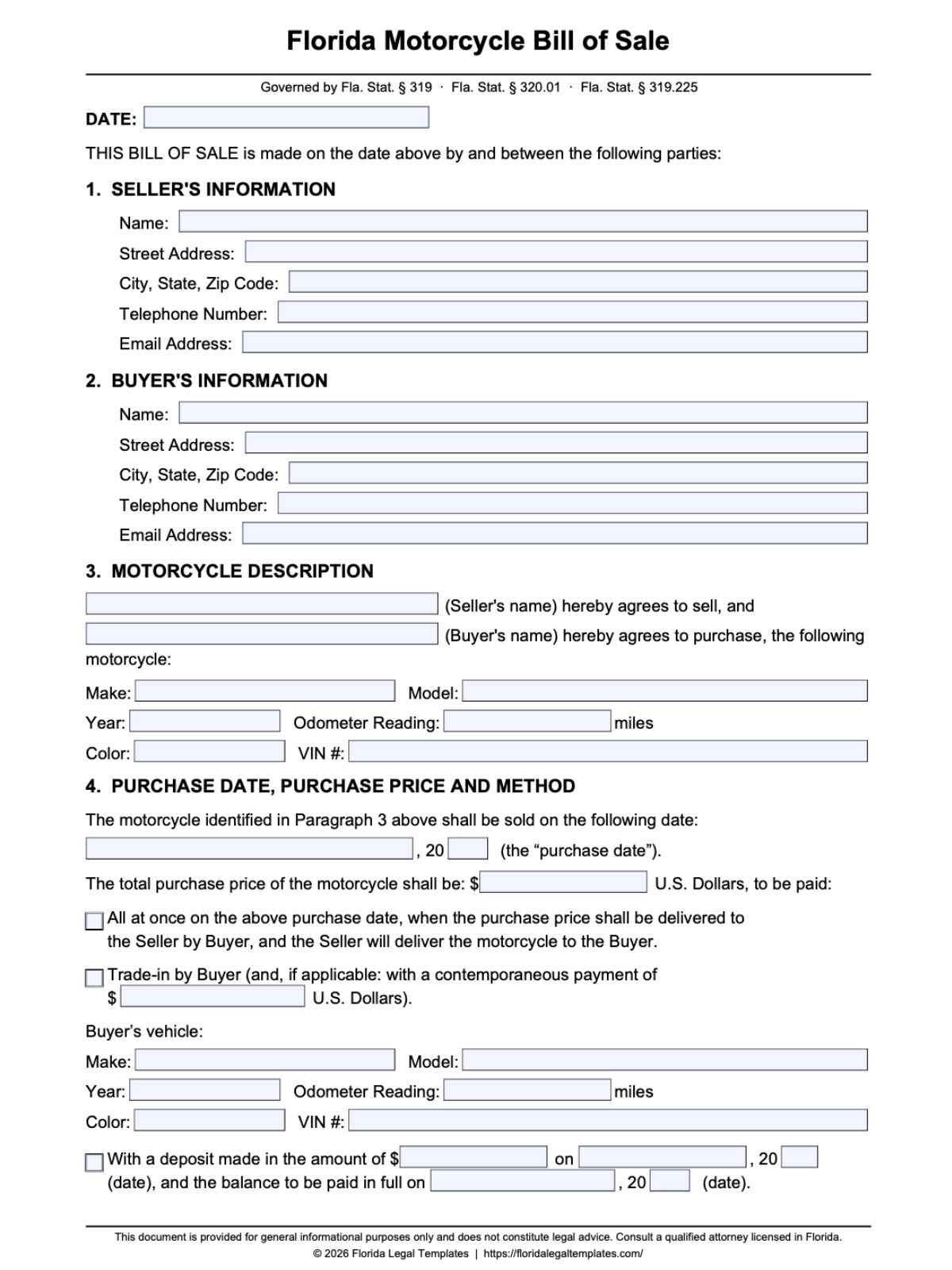
Florida Motorcycle Bill of Sale (PDF, Printable, Fillable)
Get PDF | WORD
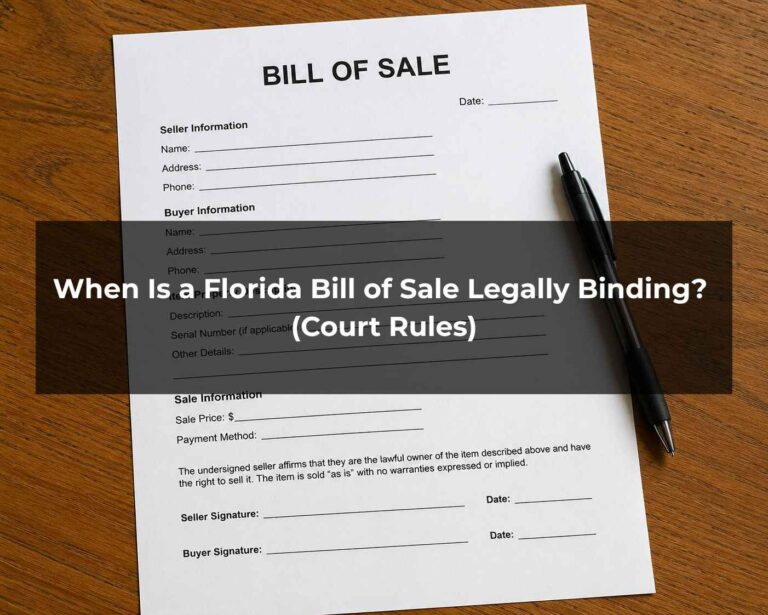
A Florida motorcycle bill of sale form provides a structured format that ensures all required information is included.
What the document includes:
- Buyer and seller full legal names and addresses
- Motorcycle details:
- 17-digit VIN
- Make, model, and year
- Purchase price and payment terms
- Odometer disclosure section for transactions that are not exempt under Florida law
- Sales tax acknowledgment
- Signatures (seller required; buyer strongly recommended)
Who should use this:
-
Private sellers documenting the agreed price and terms of a motorcycle sale
-
Buyers who want a written record of the motorcycle’s condition and payment
-
Both parties who need a supporting document for their Florida title-transfer records
When this template may NOT be sufficient:
- If the seller does not have the certificate of title
- If the VIN is missing, altered, or invalid
- Dealer or financed transactions requiring additional documentation
Even a complete Florida motorcycle bill of sale pdf cannot replace the legal requirement of transferring the title.
What Is a Florida Motorcycle Bill of Sale?
A Florida motorcycle bill of sale records the basic terms of the private sale, but it does not replace the Florida certificate-of-title process required to document ownership.
Legal framework:
- Governed by:
- Florida Statutes Chapter 319 (Title Certificates)
- Chapter 320 (Motor Vehicle Licenses)
- Chapter 316 (traffic and operational laws)
Legal nuance:
Motorcycles are treated as motor vehicles under Florida law, and therefore, ownership transfers are regulated through the title system rather than the bill of sale itself.
What the buyer and seller should remember:
The bill of sale records the agreed price, payment terms, and motorcycle details. The certificate of title serves a different purpose: it records the ownership transfer through Florida’s motor vehicle system. Both documents help establish a clear transaction record, but the bill of sale cannot replace the required title assignment.
Execution validity:
- Use the applicable title-transfer documents and include complete buyer and seller information in the bill of sale.
- A separate private bill of sale does not generally need notarization merely because it documents a Florida motorcycle sale.
Practical implication:
A signed bill of sale does not substitute for the title-transfer process. Florida law generally requires the purchaser to obtain a certificate of title, and the title application must be filed within 30 days after delivery of the motorcycle.
Motorcycles are regulated as motor vehicles under Florida law, which means the title transfer rules that apply to cars apply here as well. If you’re familiar with the Florida car bill of sale process, the motorcycle transaction follows the same DHSMV framework — HSMV 82050, Notice of Sale, and 30-day title transfer deadline all apply. For off-road or non-titled recreational vehicles, the process differs; the ATV bill of sale requirements in Florida operate under a separate registration structure worth reviewing if you’re selling both types of equipment.
Key Florida Laws That Affect Florida Motorcycle Bill of Sale
Summary of Applicable Laws
| Topic / Issue |
Florida Legal Rule |
Governing Statute |
| Execution Formalities |
Must be signed by the seller, and the purchaser’s name should match the purchaser shown on the certificate of title. The bill of sale can document the transaction, but the title itself controls the ownership transfer. |
Fla. Stat. § 319.22 |
| Time Limits |
The purchaser must file the title application, assignment, or reassignment within 30 days after delivery of the motorcycle; a $20 additional fee applies when the filing is late. |
Fla. Stat. § 319.23(6) |
| Notice of Sale |
The seller must notify the department within 30 days after the sale or transfer using the prescribed notice process. To do so, submitting HSMV 82050 to the tax collector’s office or license plate agency is one way to document the sale.
|
Fla. Stat. § 319.22(2) |
| Odometer Disclosure |
The seller must complete the required odometer disclosure at the time of title transfer unless the motorcycle is exempt under Florida law. Motorcycles from model year 2011 or newer become exempt after 20 years, while motorcycles from model year 2010 or older become exempt after 10 years. |
Fla. Stat. § 319.225(4) |
| Title Possession Rule |
The seller must provide the certificate of title, properly assigned to the buyer, through the applicable Florida title-transfer process. |
Fla. Stat. § 319.21 |
When a motorcycle has an outstanding lien, the parties need to address the lien through Florida’s title and lien procedures before completing the transfer. If the title is held electronically or by a lienholder, additional FLHSMV procedures may apply. If the seller is carrying the financing themselves, a separate private loan agreement should document the payment terms, interest rate, and default conditions. The bill of sale alone is not sufficient to govern an installment arrangement, and mixing the two functions into one document typically leaves both parties underprotected.
Practical Impact & Document Clauses
These laws directly determine how a Florida motorcycle bill of sale must be prepared and used.
First, the seller must have possession of the title at the time of sale under Fla. Stat. § 319.21. Selling a motorcycle without a title is illegal, and a bill of sale cannot replace it. In practice, this means the transaction cannot be completed legally until a duplicate title is obtained if the original is missing.
Second, timing obligations are strict. The buyer must apply for title transfer within 30 days under Fla. Stat. § 319.23. Missing this deadline results in a late fee and delays in ownership recognition.
At the same time, the seller must file a Notice of Sale within 30 days under Fla. Stat. § 319.22. This step is critical for liability protection. Filing the Notice of Sale gives the seller an additional way to establish the statutory protection from civil liability for the motorcycle’s subsequent operation.
The bill of sale must also include a valid odometer disclosure under Fla. Stat. § 319.225. The seller must certify whether the mileage is:
- Actual
- In excess of mechanical limits
- Not actual
Failure to complete or acknowledge a required odometer disclosure can, therefore, prevent the department from issuing the certificate of title and may also result in the statutory penalties provided by F.S. § 319.225.
Together, these rules mean the bill of sale is not just a formality—it must align with statutory requirements to support a valid ownership transfer and protect both parties.
How to Create or Fill Out the Florida Motorcycle Bill of Sale
Completing a Florida motorcycle bill of sale requires attention to detail and legal compliance.
Step-by-step process:
- Identify the parties
- Include full legal names and addresses
- Describe the motorcycle
- VIN (17 digits required)
- Make, model, and year
- State the purchase price
- Include payment method and terms
- Insert odometer disclosure
- Select the correct certification:
- Actual mileage
- Exceeds mechanical limits
- Not actual mileage
- Include sales tax acknowledgment
- Buyer is responsible for paying tax at title transfer
- Sign the document
- Seller signature required
- Buyer signature recommended
- Transfer the title
- Properly assign the certificate of title to the buyer
- File Notice of Sale (seller)
- Apply for new title (buyer)
Practical tips:
-
Compare the VIN on the motorcycle’s frame with the number printed on the certificate of title before signing.
-
Make sure the purchase price and payment terms match what both parties actually agreed to.
-
Give each party a signed copy and retain the Notice of Sale or its submission record for your transaction files.
When to Use Florida Motorcycle Bill of Sale
If you’re buying or selling a motorcycle privately in Florida, a written bill of sale helps establish exactly what both parties agreed to. Include the motorcycle’s VIN, purchase price, sale date, and payment terms so the document can support the rest of the title-transfer paperwork.
Common use cases:
-
Recording a motorcycle sale between private individuals without dealer involvement
-
Documenting the agreed purchase price when payment is made in cash
-
Keeping a written record of the motorcycle’s condition and any agreed payment arrangements
Practical scenarios:
A motorcycle bill of sale is particularly useful when the buyer and seller complete the transaction separately from the tax collector’s office. It gives both parties a written record of the sale date, agreed price, VIN, and payment terms that can be kept alongside the assigned Florida title and Notice of Sale.
When NOT to use:
A private motorcycle bill of sale should not be treated as a substitute for resolving an ownership or title problem. If the certificate of title is missing, a lien remains outstanding, or the VIN does not match the motorcycle’s records, resolve the documentation issue through the appropriate FLHSMV process before completing the transfer.
Using this document correctly ensures the transaction is clearly recorded and legally supported.
Limitations and Legal Considerations
A Florida motorcycle bill of sale is not a standalone ownership document.
Key limitations:
- Does not independently establish marketable ownership without the applicable certificate-of-title process.
- Should identify the motorcycle by its VIN and include the relevant title information so the transaction can be properly documented.
Legal constraints:
- The buyer must complete the applicable Florida title application within 30 days after delivery of the motorcycle under Fla. Stat. § 319.23(6).
- The parties must complete the odometer disclosure required by Fla. Stat. § 319.225 when the motorcycle is not exempt.
High-risk scenarios:
- Selling a motorcycle without a title
- Allowing the buyer to use the seller’s license plate
Under Fla. Stat. § 320.0609, the owner must remove the registration plate when the motorcycle is sold and either surrender it or transfer it to a replacement vehicle.
Edge cases:
- Motorcycles from model year 2010 or older are exempt from odometer disclosure after 10 years, while motorcycles from model year 2011 or newer remain subject to disclosure until they reach 20 years of age.
- Out-of-state purchases requiring additional documentation
- Salvage or rebuilt titles requiring careful review
Knowing where the bill of sale ends and the title-transfer process begins can prevent avoidable problems when the motorcycle is registered in the buyer’s name.
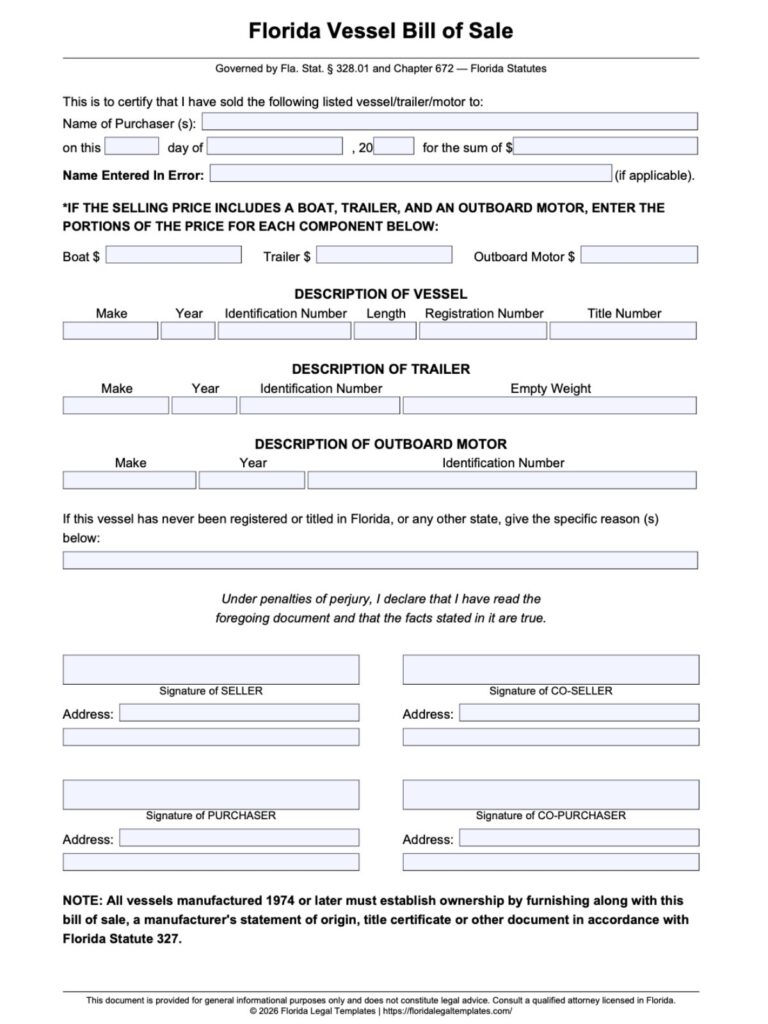
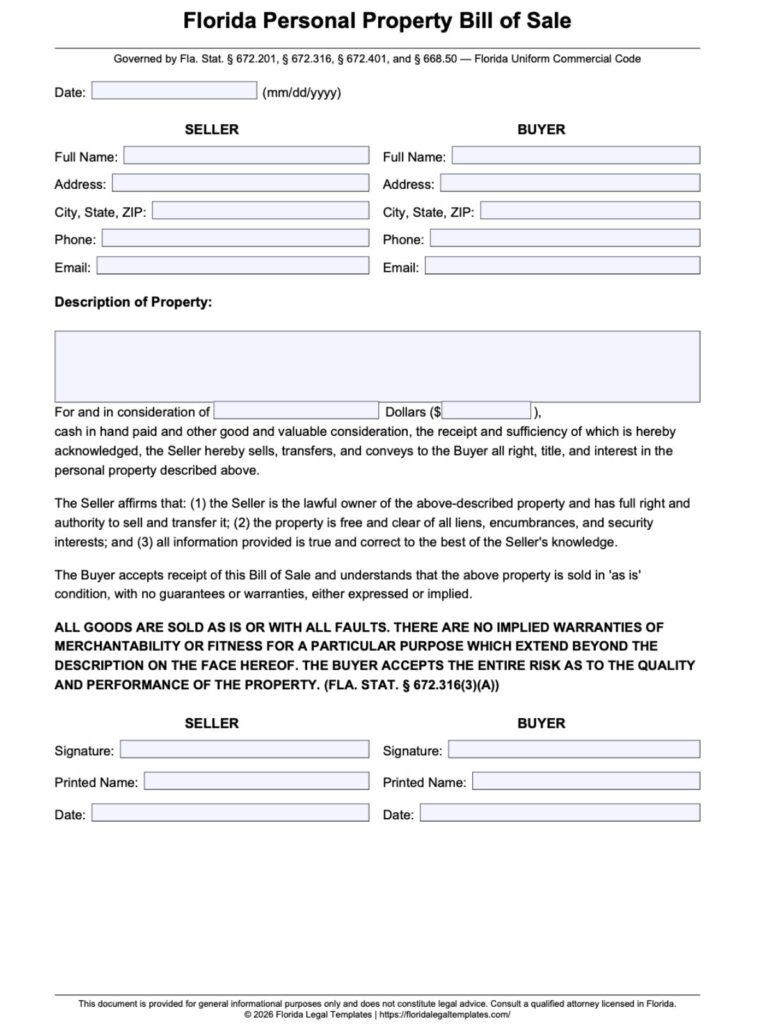
One scenario that trips up private sellers is a sale that involves a trailer or towed equipment bundled with the motorcycle. If the trailer has its own VIN and title, it requires its own transfer documentation — the trailer title and sale documentation process in Florida is handled separately from the motorcycle transaction and cannot be covered on the same bill of sale. For general non-vehicle personal property transferred as part of the same deal, the standard Florida bill of sale would be the appropriate companion document.
Common Mistakes to Avoid
Selling without a valid title
This violates Florida law.
Consequence: Transaction is legally invalid and cannot be completed.
Skipping odometer disclosure
Required in most cases.
Consequence: Risk of fraud claims under Fla. Stat. § 319.225.
Not filing Notice of Sale
Seller fails to notify the department of the sale.
Consequence: The seller may have difficulty establishing the statutory protection from civil liability provided by F.S. § 319.22(2), so completing the required notice promptly is important.
Allowing buyer to keep license plate
Illegal under Florida law.
Consequence: Seller remains legally responsible for vehicle use.
Using incorrect or incomplete VIN
Errors in vehicle identification.
Consequence: Title transfer rejection.
Participating in title jumping
Selling without properly assigning the title can create a prohibited or fraudulent title transfer and may expose the parties to statutory penalties.
Frequently Asked Questions (FAQ)
Is a bill of sale enough to transfer motorcycle ownership in Florida?
No. A Florida motorcycle bill of sale documents the transaction, but it does not replace the certificate of title. Under Fla. Stat. § 319.22(1), the buyer generally does not acquire marketable title until a certificate of title is issued in the buyer’s name.
How long do I have to transfer a motorcycle title in Florida?
The buyer must apply for title transfer within 30 days under Florida law.
What happens if I don’t file a Notice of Sale?
You may remain legally responsible for the motorcycle, including fines or accidents, under Fla. Stat. § 319.22.
Do I need to notarize a motorcycle bill of sale in Florida?
Generally no, unless the motorcycle was purchased in a “non-titling state” (registration only). In that case, Florida requires a notarized Bill of Sale to verify ownership for the initial Florida title application.
If you’re dealing with a situation where a buyer defaulted on payments and the motorcycle needs to be reclaimed, a bill of sale doesn’t provide the legal foundation for that action. A Florida affidavit of repossession is the correct instrument for documenting the recovery of a vehicle after a failed private financing arrangement, and it’s a required step before the title can be retransferred to the original seller.
Before handing over the motorcycle, make sure the buyer and seller have completed the necessary title paperwork and agreed on the sale details recorded in the Florida motorcycle bill of sale. The seller should also submit the Notice of Sale within the required 30-day period, while the buyer remains responsible for applying for the new title within 30 days after delivery. If the motorcycle is not exempt, complete the required odometer disclosure as part of the transfer.
Legal Disclaimer: This article provides general Florida legal information and is not legal advice. Florida title, registration, tax, and odometer requirements can vary depending on the vehicle and transaction, so confirm current requirements with FLHSMV or a Florida attorney before completing a transaction.